
Art
James Turrell is an American artist known for transforming light, space, and color into immersive experiences. This personal exploration examines Joseph’s Coat and Aftershock, revealing how Turrell’s work shaped one artist’s understanding of perception, spirituality, sensory experience, and her own creative journey.
Updated 01:22 pm EST, Nov 5, 2026
Published 01:05 pm EST, Nov 5, 2026
Images: Courtesy of The John and Mable Ringling Museum of Art.
Art
James Turrell is an American artist known for transforming light, space, and color into immersive experiences. This personal exploration examines Joseph’s Coat and Aftershock, revealing how Turrell’s work shaped one artist’s understanding of perception, spirituality, sensory experience, and her own creative journey.
Updated 01:22 pm EST, November 5, 2026
Published 01:05 pm EST, November 5, 2026
Images: Courtesy of The John and Mable Ringling Museum of Art.
For those who are not familiar with James Turrell’s artwork, I must say you are missing out. But before any feathers are ruffled, I need to add some context.
In 2018, I was halfway through my master’s program in visual arts and holding down a full-time job. At the time, I was working at a small marketing firm in Miami, FL, and one of our clients was a lighting company. In one of the many creative huddles to think ‘outside the box’, I suggested creating a campaign using a series of interviews with artists who use light as part of their medium. Since I was still an amateur marketer and a naive artist mucking my way through the contemporary art scene, I was responsible for providing a list of these artists.
That’s when I stumbled across James Turrell.
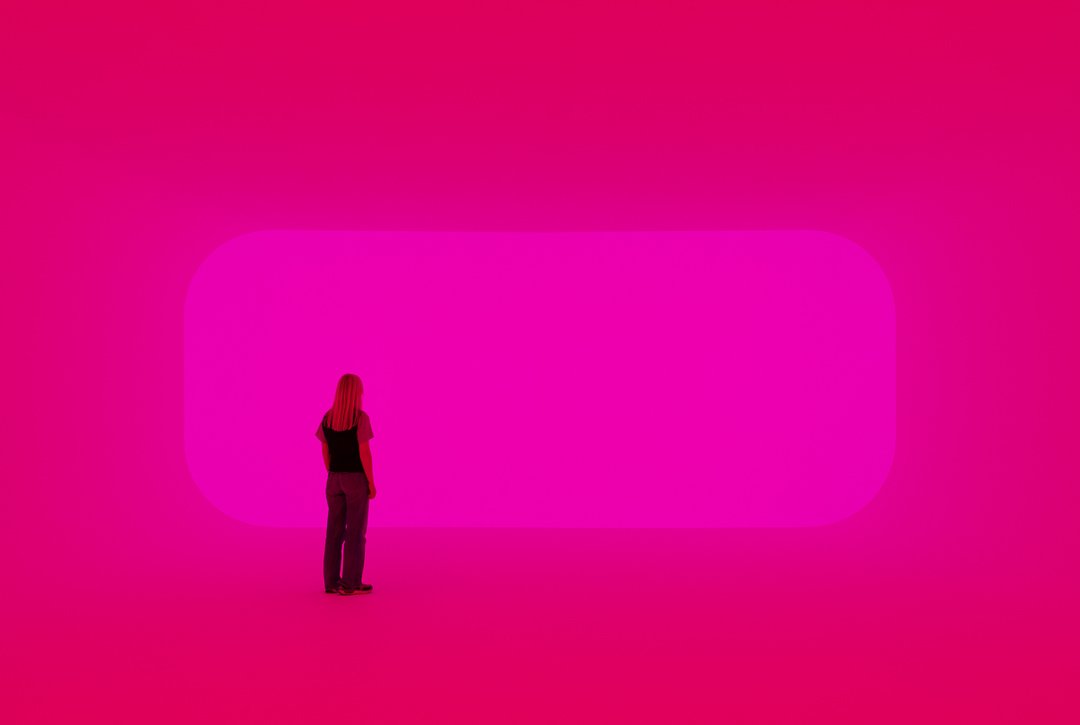
After championing the light artist campaign, it was rejected, and the company chose to go in a different direction. But in the wake of that rejection, I was led down the rabbit hole of contemporary art. I immediately gravitated towards Turrell’s work, like a moth attracted to light.
James Turrell is an American artist from Los Angeles, California, and grew up in a Quaker family. The Quakers are a group of people who belong to the Religious Society of Friends, who believe every human can be guided by “inner light”.
When he was 16 years old, he obtained a pilot’s license and was a conscientious objector during the Vietnam War (never truly enlisted); he helped fly Buddhist monks out of Tibet. In 1965, Turrell earned a Bachelor of Arts in perceptual psychology and also studied mathematics, geology, and astronomy. After graduating, he enrolled in a graduate program at the University of California, Irvine, and began exploring light as his medium. But his studies were cut short after being caught teaching other young men how to avoid being drafted, and as a consequence, he spent a year in jail. In 1973, he finally received his Master of Arts degree from Claremont Graduate University.
Given his upbringing, Turrell began experimenting with light. He worked alongside other artists exploring the same medium, including Mary Corse, Doug Wheeler, and Robert Irwin (a pioneer of the Light and Space movement in LA).
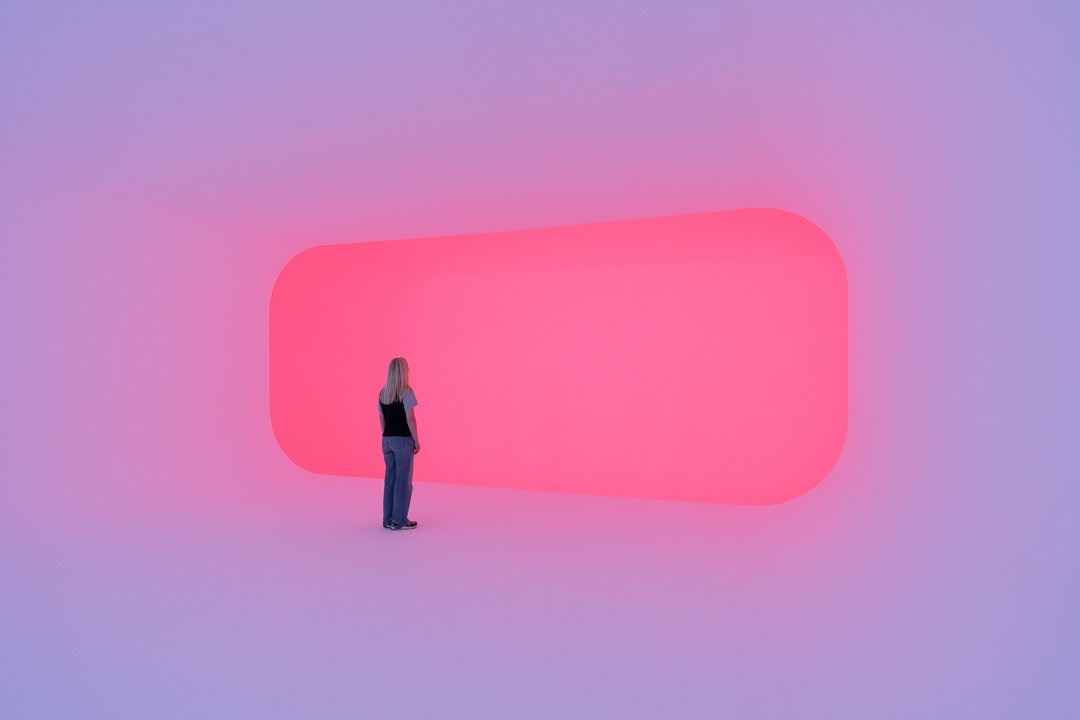
After actively participating in this movement, Turrell went in a different direction. One of his most notable works is the Roden Crater, where he excavated a dormant volcano and transformed it into a celestial immersive art experience. While the Roden Crater was underway, Turrell began his Skyspaces series.
As a Quaker and fascinated by light, Turrell’s design of the Live Oak Meeting House for the Society of Friends located in Houston, Texas, was his opportunity to combine his art with his religion. He created an enclosed space with a portion opened to the sky through an aperture in the roof, in the shape of a 12-foot-square––the light from the aperture is a direct connotation of religious worship that embodies the Quaker belief of inner divinity. And this propelled him to design more.
Turrell’s Skyspaces can be seen in multiple cities throughout the United States and Europe, each having distinct variations. I was lucky enough to experience one of his installations right before the pandemic.
Back in 2019, I had landed a solo exhibition at a gallery in Englewood, Florida, projected for March of 2020. While there to install my exhibition, I found out that the artist that I was drawn to for years had an installation nearby, so I took the opportunity to explore the John and Mable Ringling Museum of Art. This is where I got to experience Joseph’s Coat: A Skyspace by James Turrell.
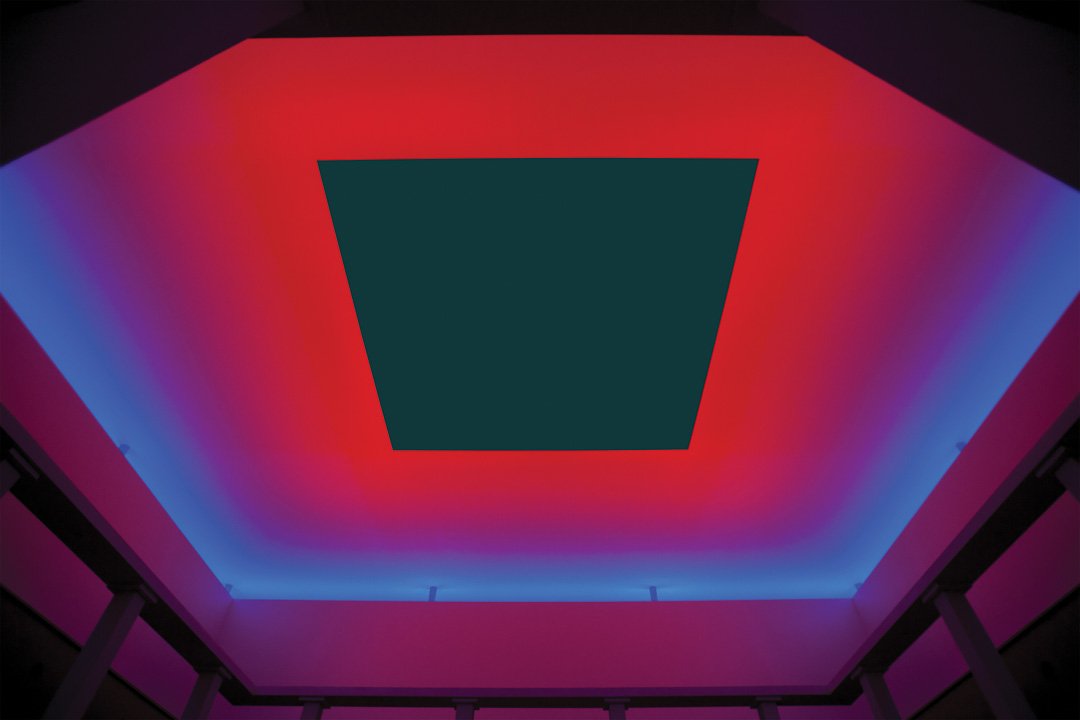
As a side note, while some Skyspaces solely rely on natural light, Turrell has expanded his series to involve LED lights to give a more unique and expanded experience. However, Joseph’s Coat does, in fact, have LED lights, but it only happens at sunset. Since I was visiting during the day, I missed this, but sitting on the bench looking at the bright blue sky was indeed an ethereal experience.
Prior to arriving, I had been stressed with my own exhibition and mounting expectations, but 30 minutes immersed in Turrell’s exhibition was exactly what I needed. As I sat there, I was immediately reminded of my childhood, growing up in the South of the U.S. The silence and the light shining through the aperture are very similar to the silence before churchgoers arrive and the light shining through the windows of a Southern Baptist Church. Memories flooded back. I don’t know if it was the wooden benches, the silence, the time of day, or a combination of everything, but I could feel the religious connotation.
I walked away from Turrell’s Skyspace with a modicum of peace and tranquility in that chaotic moment of my life. He is the very reason why I continue to produce and chase artistic experience.
Years later, I found myself back in Europe. Traveling here is something I love to do, not only for cultural experiences, but for the art. It’s an obsession.
This time, Copenhagen, Denmark, was my destination. Instead of the typical tourist things, trips to the museums were at the top of the to-do list. I spent the majority of the trip bouncing from Designmuseum Danmark, the Statens Museum for Kunst (SMK), the David Collection (which I highly recommend visiting), and, as a last-minute detour before I left the city, I grabbed a taxi to visit the Copenhagen Contemporary.
Upon purchasing my entry ticket, the attendant gave me an overview of the museum and asked if I wanted to see the James Turrell exhibition. To my surprise, I had no clue the museum had just completed a permanent space for his LED light experience, which is an immersive installation called Aftershock. The Copenhagen Contemporary is in an old welding facility, so the space is large, to say the least, and Turrell’s installation is located on the top floor. She instructed me to see Aftershock first mainly because of where it’s located, the queue, and timing, as they only allow a few people in to experience it.
Since I missed out on the LED experience 6 years before, I was finally getting my chance. As I waited in line and observed the people around me, it was also important to read the didactic to give some additional context about the body of work.
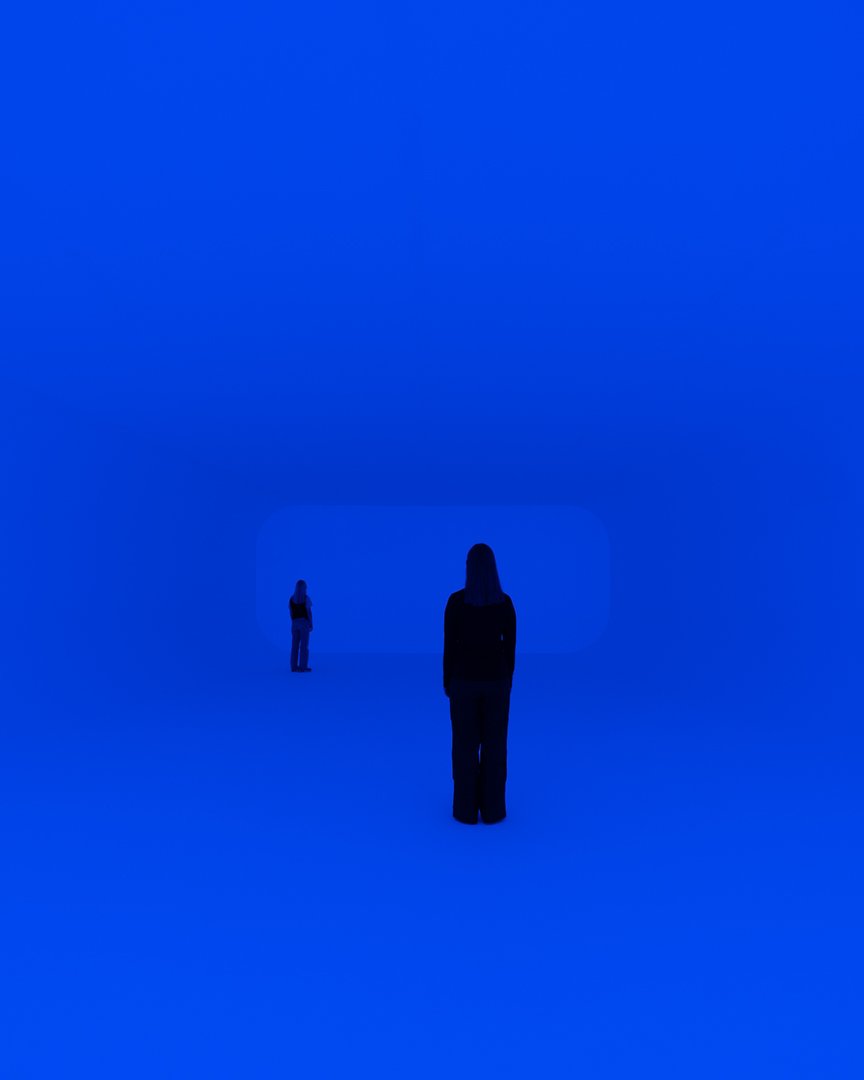
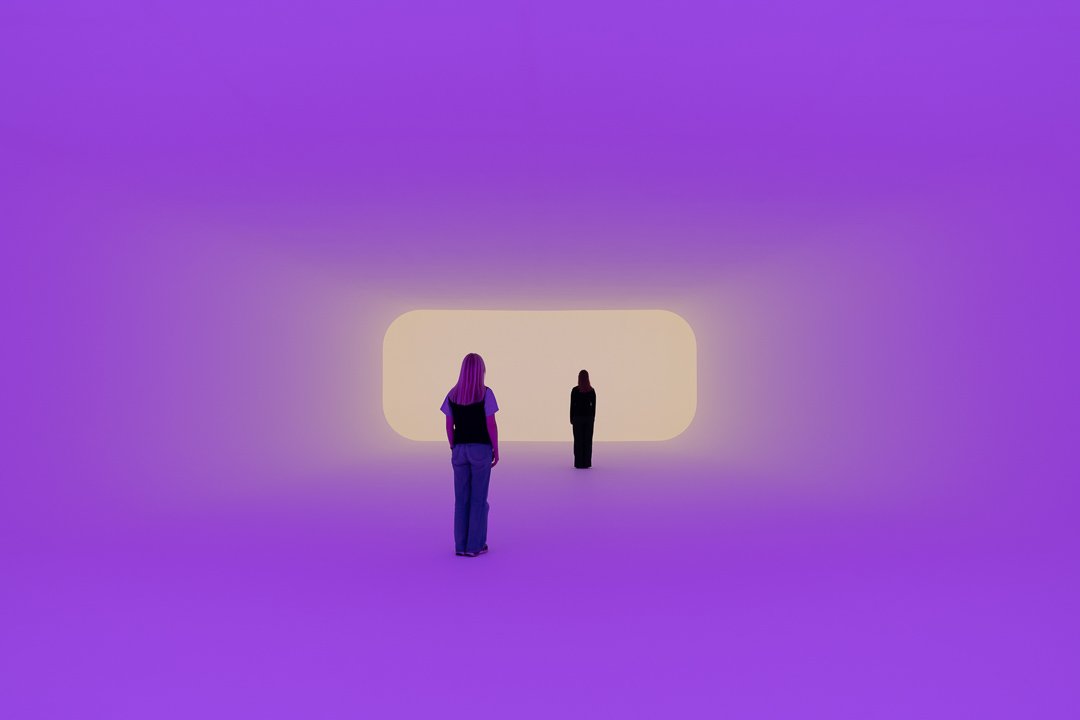
Your experience begins outside the installation, where everyone is asked to wait before entering. In front of the opening of the installation are white stairs; as if you are about to ascend into a temple of light, you can see the colors shift effortlessly and with an ethereal quality throughout the opening. But before everyone entered, an attendant instructed us where to stop while inside, as there is a ledge for safety purposes. As you enter the installation, you are immediately engulfed by beautiful, shifting colors. Within minutes, if not seconds, I started to feel disoriented.
Aftershock is one of the numerous “Ganzfelds” installations, which have become iconic for Turrell’s exploration of light, space, and color. Ganzfeld is a psychological concept that was introduced in the 1930s by the German psychologist Wolfgang Metzger, who explored the effects of sensory overload. If a human is exposed to an intense torrent of color, the brain starts experiencing hallucinations as it struggles to identify meaning in the influx of the intense color field. This is exactly what Aftershock provides its participants.
Given Turrell’s background as a pilot, he frequently reflects on how flying has played a role within his artwork. He describes flying as much like being in a space with no beginning or end, just like traveling through thick fog or clouds. While most people may not be pilots, they have experience traveling through the sky; peeking out the window is just a taste of what pilots truly experience. Bringing us back to Aftershock, where you can physically experience this phenomenon.
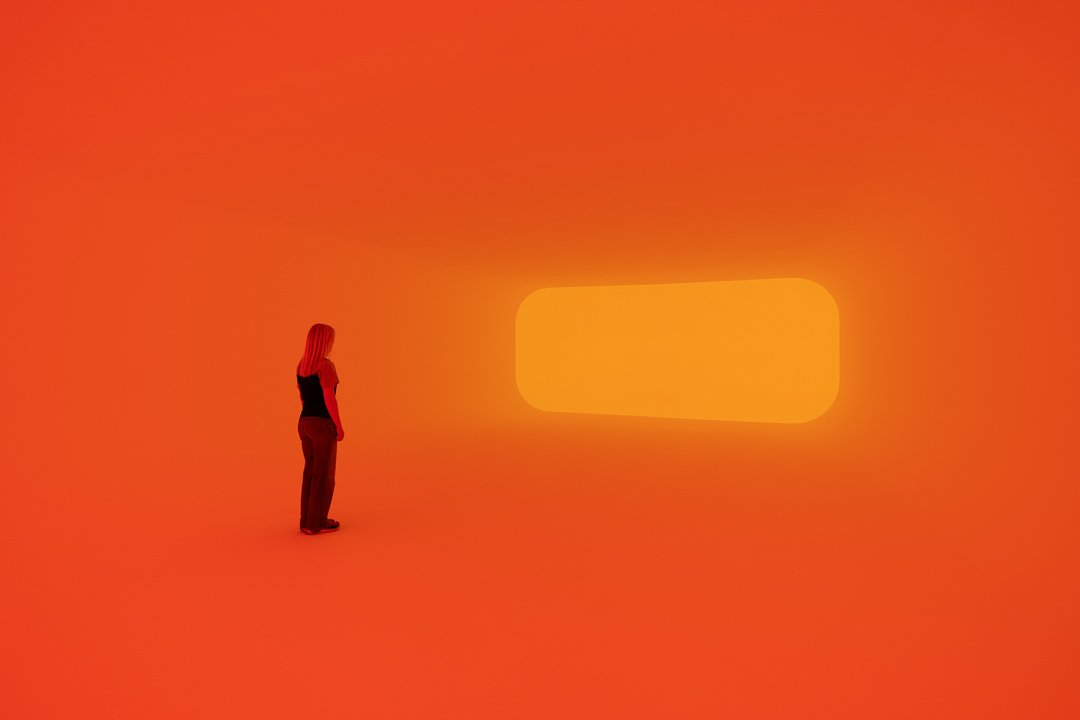
While inside the installation, I observed everything. The people, how they moved about, the colors, the pattern of the colors as they shifted. One thing no one else did was look back at the opening while inside. I’m certain this isn’t part of the experience, but I couldn’t help myself. I was the only one who took a good while staring at the opening while everyone faced forward. It reminded me of a dream, one where you’re floating or flying and suddenly a window or door appears. It was like experiencing a dream in real time.
Every individual perceives moments, emotions, time, light, and more in their own unique way; this is true not only in life but also in art. Turrell’s creations transcend the concept of light; it is light. His works serve as vessels for light where light and color are tangible. It challenges the viewer to embrace this as both a physical and metaphorical presence of human perception, ultimately reflecting the individual experience in life.
This journey started six years ago when I was trying to figure out how to market lightbulbs. Turns out, it was the work of Turrell that helped illuminate my own path as an artist. The time in between was filled with the complexities of life, complete with its sensory overload. Yet, in the mix of it all, light remained a constant presence.
Whether it’s felt in a quiet room, meditating, allowing it to guide you through life’s seasons, or reminding you that flying through clouds not knowing the destination is a metaphor for our personal journeys. Today often feels like we’re hallucinating in all the chaos; one thing is for sure: light and color can be felt as a blanket of comfort.
Turrell’s latest and perhaps the largest immersive installation, called Blue Sea Sky, is located at Superblue Miami in Miami, Florida. This expansive 50,000-square-foot environment promises to offer a truly unique experience for all who visit. So if you’re passing through or in the area looking for something to do, I highly recommend grabbing a ticket and experiencing this for yourself.

With a Bachelor’s in Studio Art from the University of South Carolina and a Master’s from the Miami International University of Art & Design—enhanced by studies in Italy—Michelle has expanded into an international artist, founded Arthesive.com, and continues creating, exhibiting, mentoring, and contributing to the global art community.
Get the latest fashion, culture, and art updates, including magazine releases release parties
Sponsored Content


