Runway
Dive into LeCRI's Fall/Winter 2026 collection, a whimsical yet powerful homage to Japan's legendary ama free-divers. Explore how the brand masterfully manipulates fragile silks and tulle using traditional shibori techniques to create diaphanous, siren-inspired silhouettes that prove joyful fashion is the ultimate rebellion.
Updated 10:10 am EDT, March 17, 2026
Published 10:06 am EDT, March 17, 2026
Photo Courtesy: Ukrainian Fashion Week
Runway Photos: Volodymyr Bosak
Backstage Photos: Serhiy Khandusenko
Special Thanks: Lisa Ushcheka
Dive into LeCRI's Fall/Winter 2026 collection, a whimsical yet powerful homage to Japan's legendary ama free-divers. Explore how the brand masterfully manipulates fragile silks and tulle using traditional shibori techniques to create diaphanous, siren-inspired silhouettes that prove joyful fashion is the ultimate rebellion.
Updated 10:10 am EDT, March 17, 2026
Published 10:06 am EDT, March 17, 2026
Photo Courtesy: Ukrainian Fashion Week
Runway Photos: Volodymyr Bosak
Backstage Photos: Serhiy Khandusenko
Special Thanks: Lisa Ushcheka
In a world beset by bleakness, whimsy becomes subversive. When the question “Why are you wearing that?” can be answered by a simple “Because it makes me happy,” that is powerful.
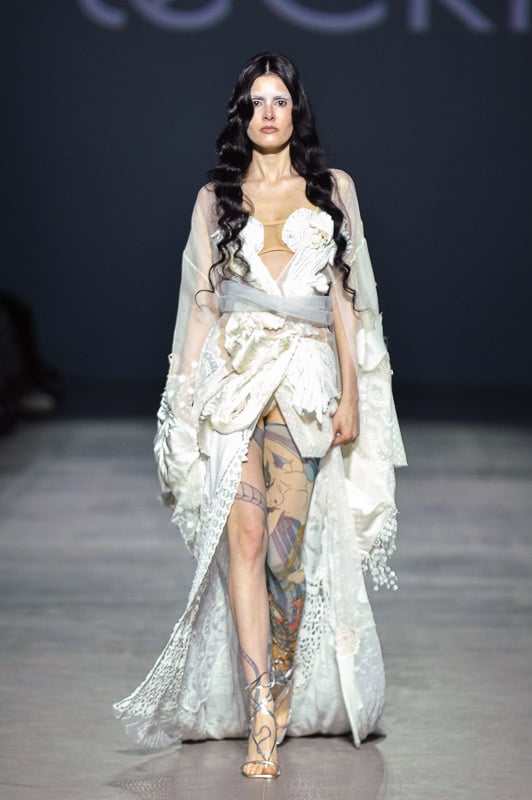
Like many things that get shoved into the category of “whimsical,” it’s easy to ignore the very real-world roots of LeCRI’s F/W 2026 collection. The pieces pay homage to the ama, Japanese women free-divers who embrace the power of the ocean to harvest pearls and seafood.
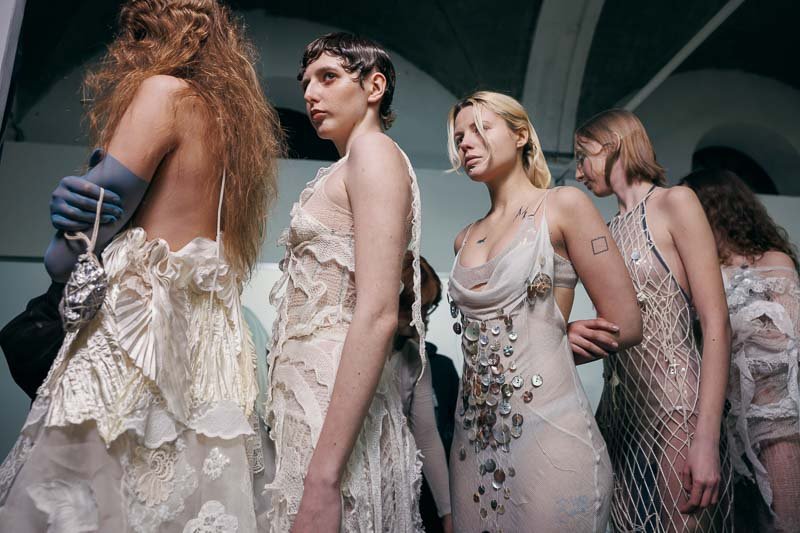
LeCRI "Ama" collection during Ukrainian Fashion Week - March 2026
Traditionally, these women wear white, as it’s easy to spot in the dark water off the coast of Japan, and it’s also thought to ward off sharks. There’s no room for debate that these are powerful women.
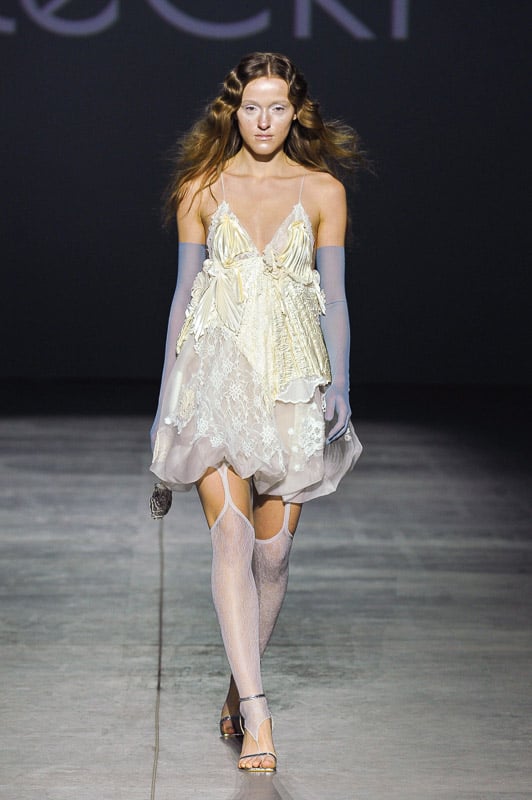
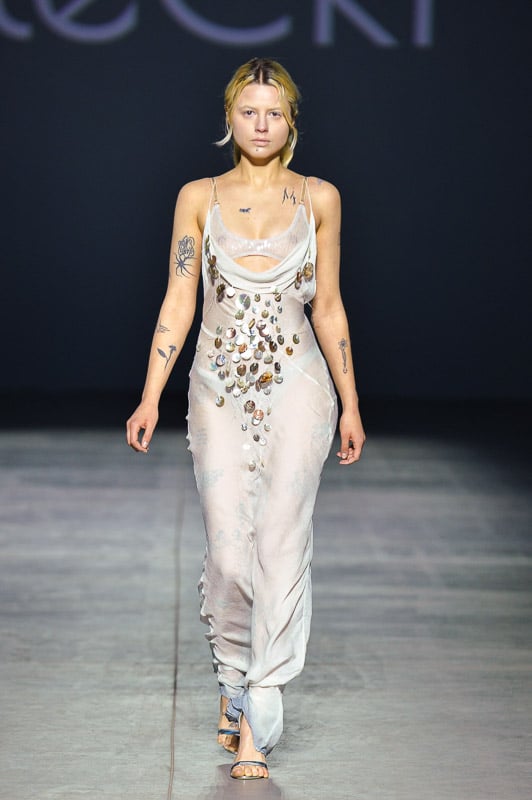
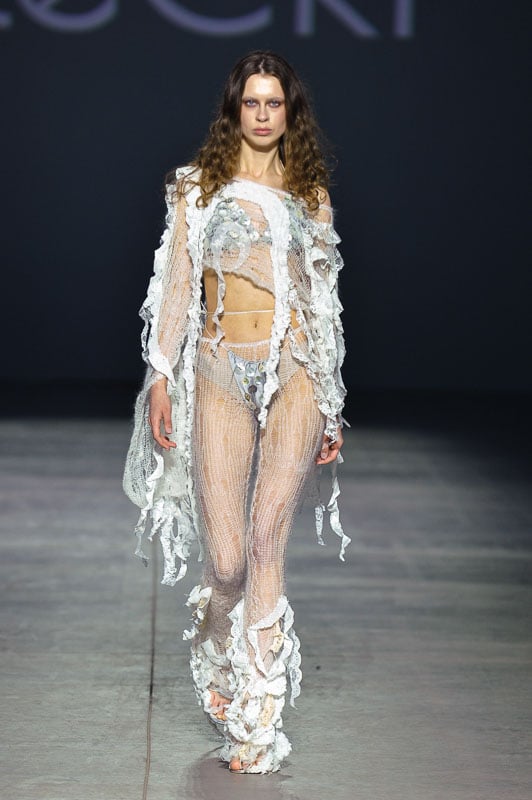
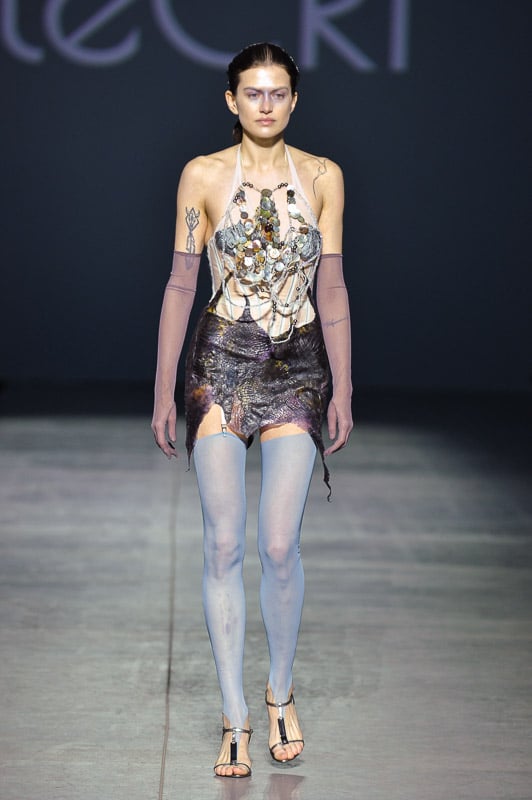
LeCRI has leaned into the history of these women, with the predominant colors being shades of white punctuated by the grey of a stormy sea, or bright blue. The silhouettes are diaphanous, ethereal as seafoam. Their designs are anchored by seashells and scales, organic touches that bring the collection back to reality. The entire collection looks as if a pod of sirens emerged from the sea, bringing whatever caught their eye with them and draping it artfully around their bodies.
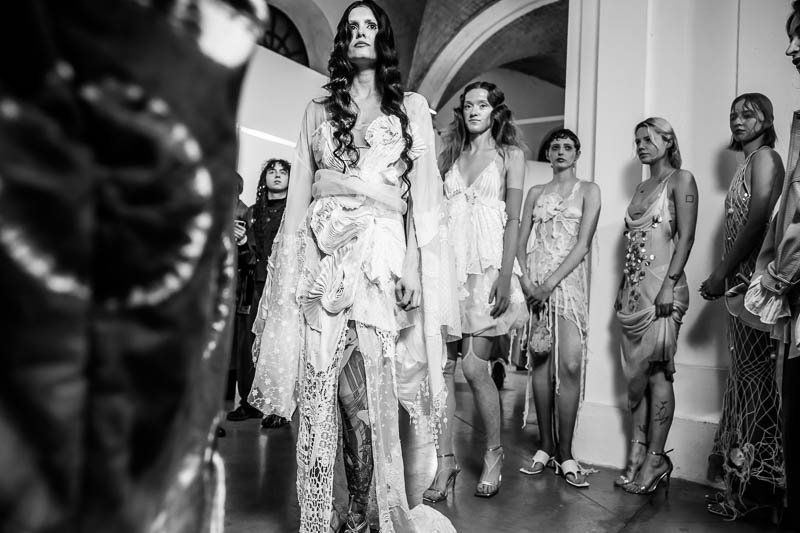
LeCRI "Ama" collection during Ukrainian Fashion Week - March 2026
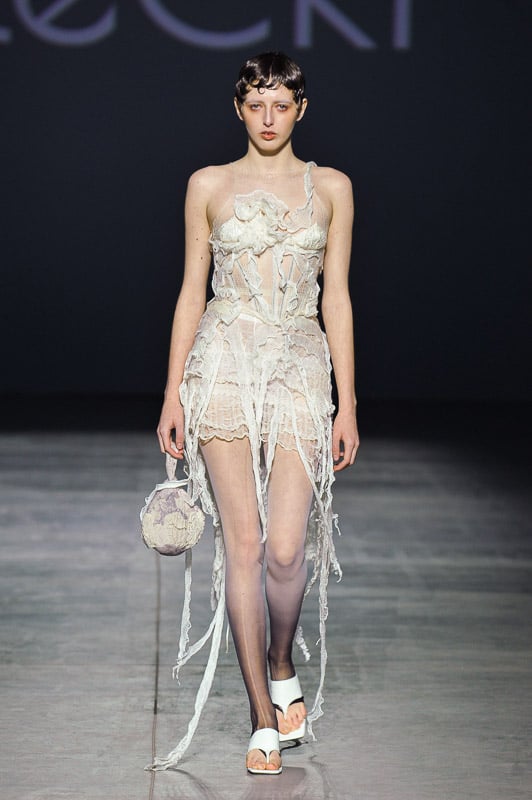
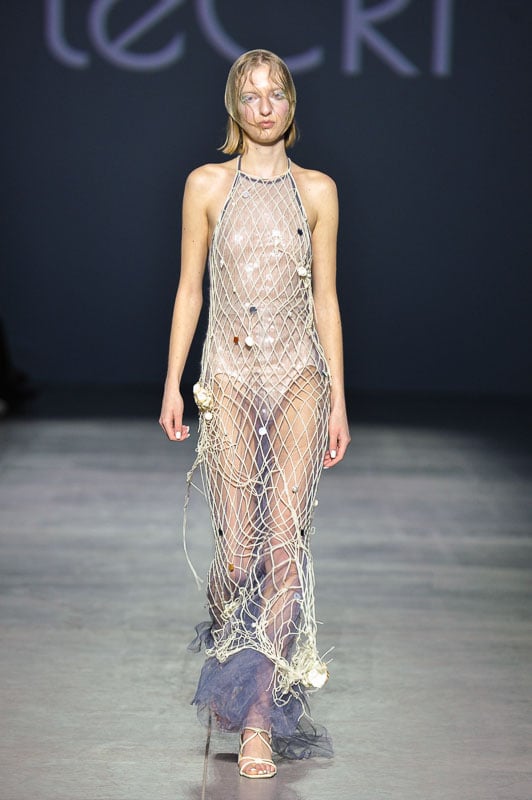
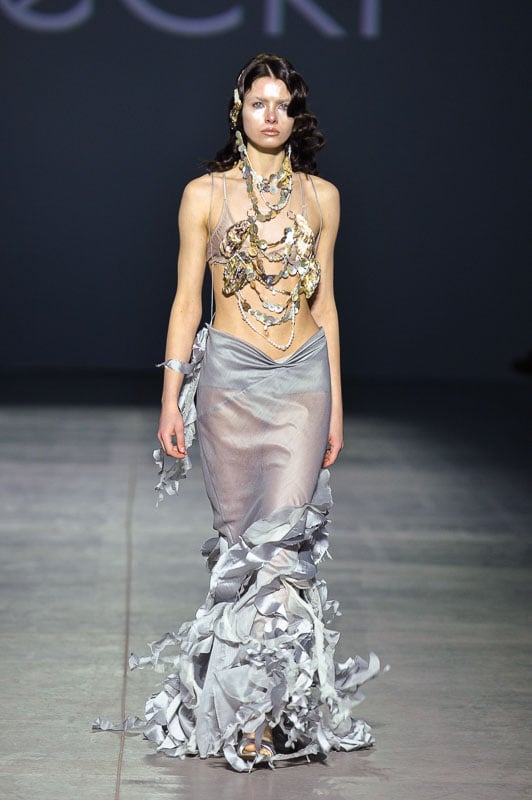
In addition to the color, LeCRI has paid homage to the complex techniques of Japanese fabric pleating, such as shibori. In one particular piece, translucent silk strips are piled up on top of each other chaotically at the bottom of a grey skirt, giving the illusion of a woman emerging from the ocean. Another wears a fishnet with a puff of tulle at the bottom, and I confess that, as a child of the 80s who came of age during the 2000s, I had a moment of nostalgia for a truly questionable fishnet-with-scales hip wrap that I wore until it literally fell apart.
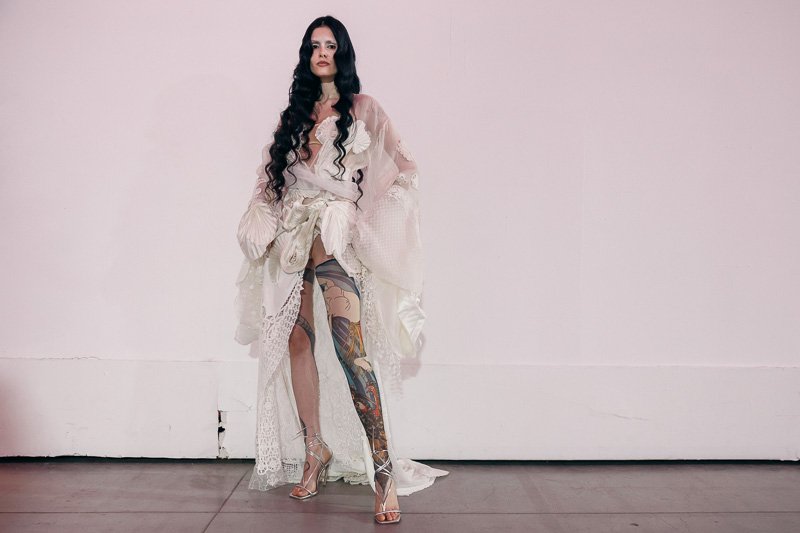
LeCRI "Ama" collection during Ukrainian Fashion Week - March 2026
With all of these pieces, the emphasis is put on evoking a feeling rather than true functionality, which is the point—fashion shows are about art. If you’ve never handled such delicate, fragile materials, it’s easy to sneer at collections like this one and proclaim, “Anyone could do that.” To that I say, go ahead. Go on. Pick up a needle and thread, and piece bits of fabric together into some sort of wearable shape. The truth is that while it looks simple and haphazard by turns, it’s a real show of skill to be able to manipulate fabric like this, to make it into waves and clouds.
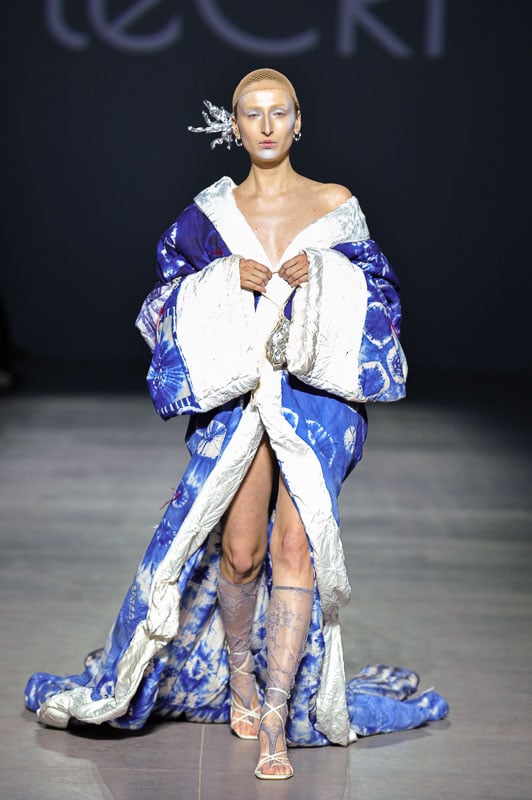
Of course, the real show-stopper (in my opinion) is the blue kimono-like robe at the end. The striking blue brings to mind traditional Japanese indigo dye, but this time done in a sort of tie-dyed pattern that looks like water drops. It’s a garment for a queen, someone who has mastered both water and air. It’s not the sort of thing one would wear to go pick up a gallon of milk at the store, but then, why not?

Jordan emerged from a cornfield in Indiana in 1986. She went on to gain education in history, art history, and literature. She has predominately made a living writing for a variety of media, as well as a dress/fashion historian. She currently resides in a bog in Sweden and emerges every so often to forage for cheese and point at dogs.
Get the latest fashion, culture, and art updates, including magazine releases release parties
Sponsored Content