Runway
Discover how Khrystyna Rachytska Fall/Winter 2026 collection "Live," champions sustainable, slow fashion by reviving traditional Ukrainian silhouettes, intricate hand embroidery, and endangered techniques like hand smocking to create profoundly modern, wearable art.
Updated 12:10 pm EDT, March 17, 2026
Published 11:53 am EDT, March 17, 2026
Photo Courtesy: Ukrainian Fashion Week
Runway Photos: Volodymyr Bosak
Backstage Photos: Serhiy Khandusenko
Special Thanks: Lisa Ushcheka
Discover how Khrystyna Rachytska Fall/Winter 2026 collection "Live," champions sustainable, slow fashion by reviving traditional Ukrainian silhouettes, intricate hand embroidery, and endangered techniques like hand smocking to create profoundly modern, wearable art.
Updated 12:10 pm EDT, March 17, 2026
Published 11:53 am EDT, March 17, 2026
Photo Courtesy: Ukrainian Fashion Week
Runway Photos: Volodymyr Bosak
Backstage Photos: Serhiy Khandusenko
Special Thanks: Lisa Ushcheka
So, as a disclaimer, I’m a fashion historian. I love the way that people of the past made and wore clothes. I love learning their techniques, and I love applying them to modern pieces (Fun fact: What we consider “couture” sewing today was standard practice 100 years ago.). Naturally, you can imagine that when I saw Khrystyna Rachytska’s “Live” collection, it was love at first sight.
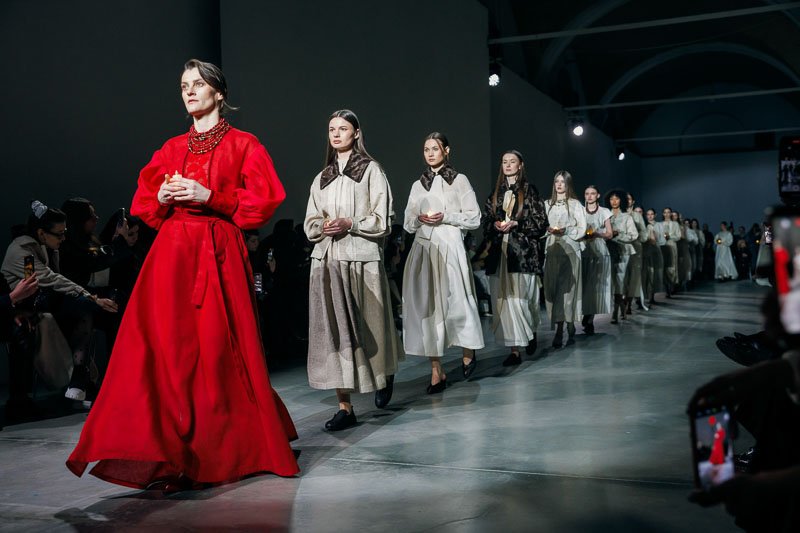
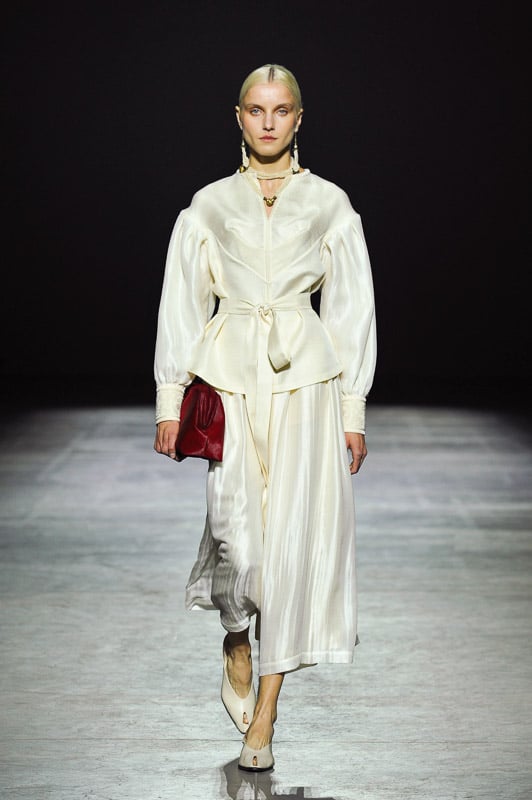
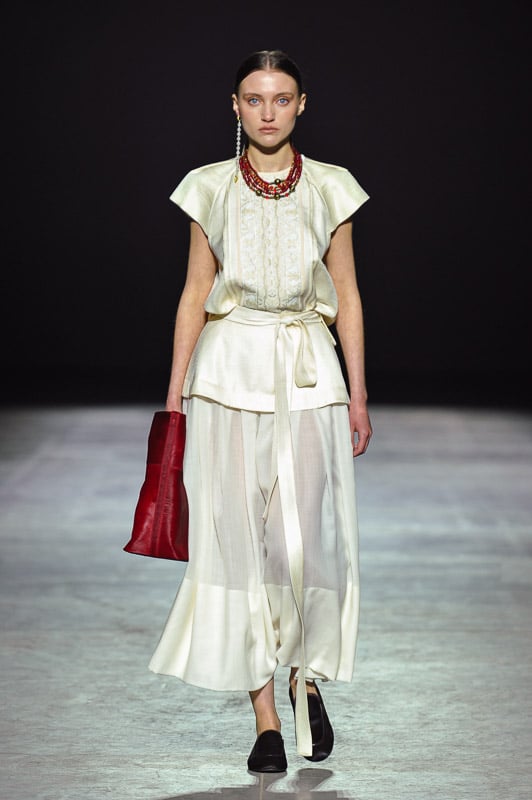
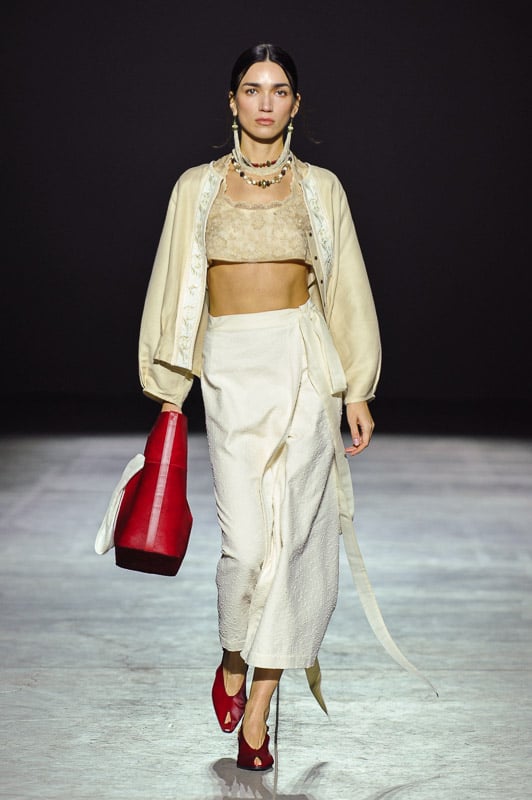
Khrystyna Rachytska "Live" during Ukrainian Fashion Week - March 2026
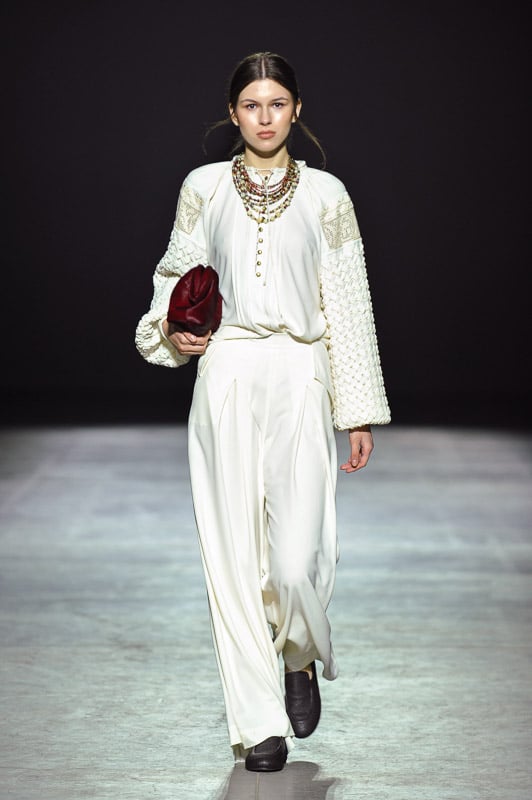
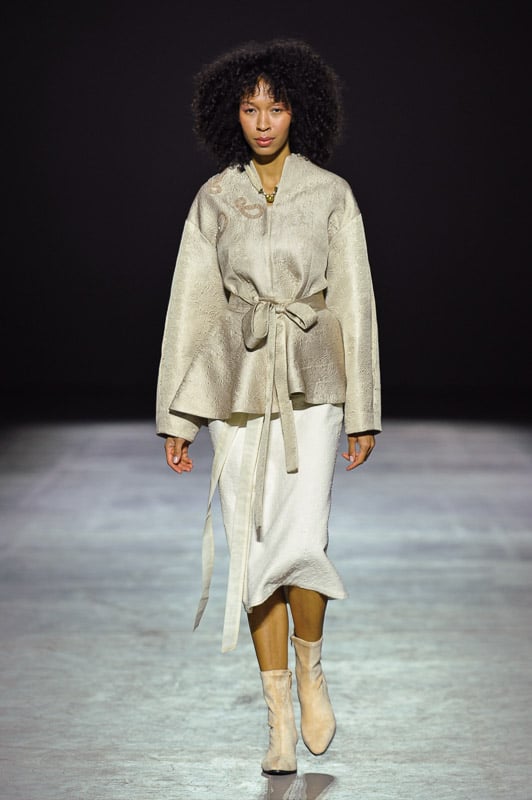
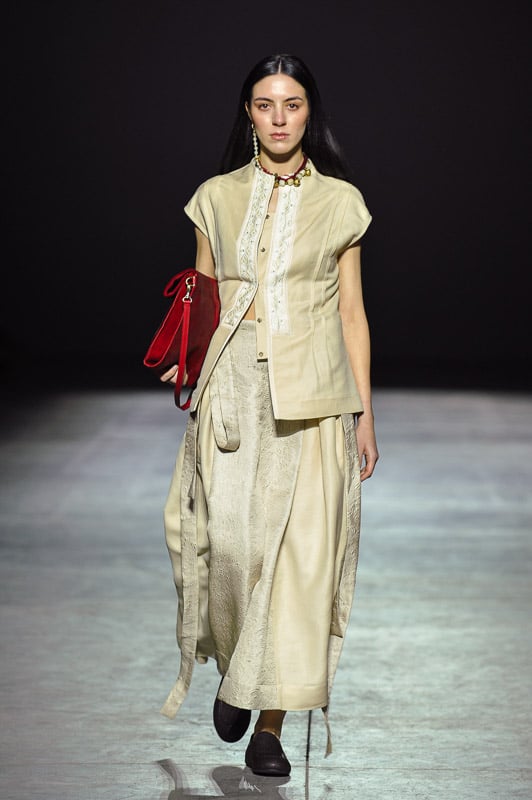
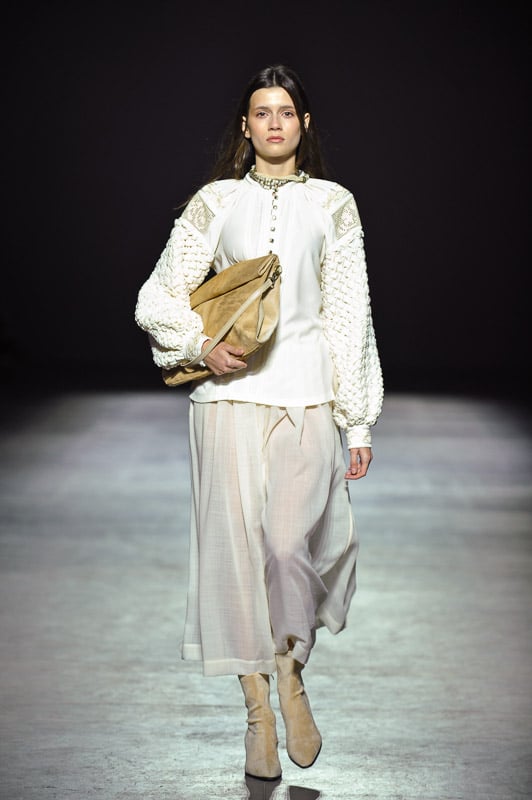
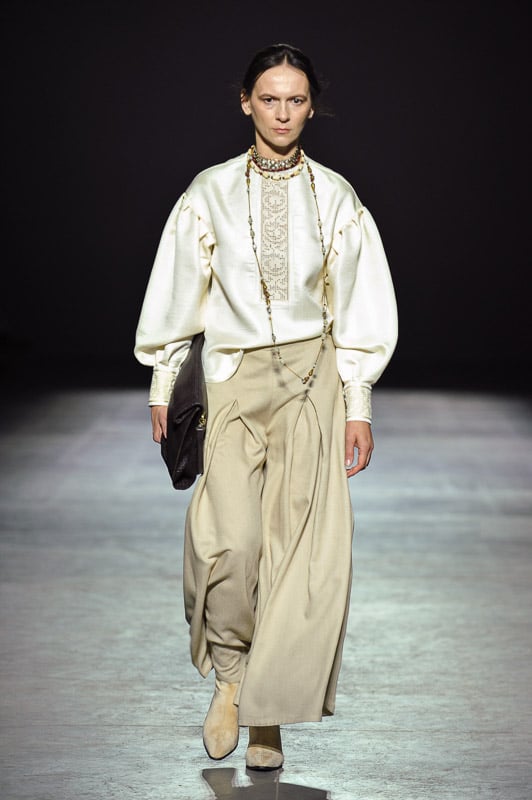
Traditional Ukrainian silhouettes are brought forward to today, creating a surprisingly contemporary look. There’s a softness to the shapes, but don’t mistake it for delicateness; these pieces are born of centuries of women who worked the land, and the strength remains visible. In particular, the blouses, with their softly draped bodies and bishop sleeves, are a wonderful fusion of wearable practicality and artistic merit.
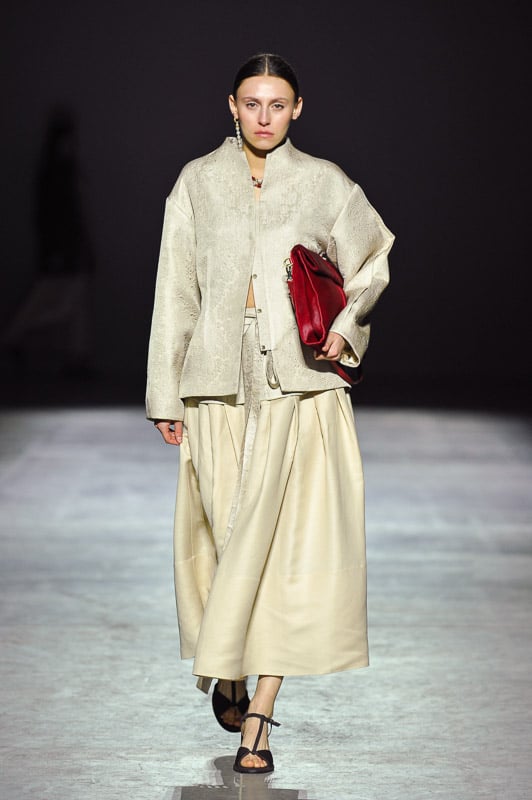
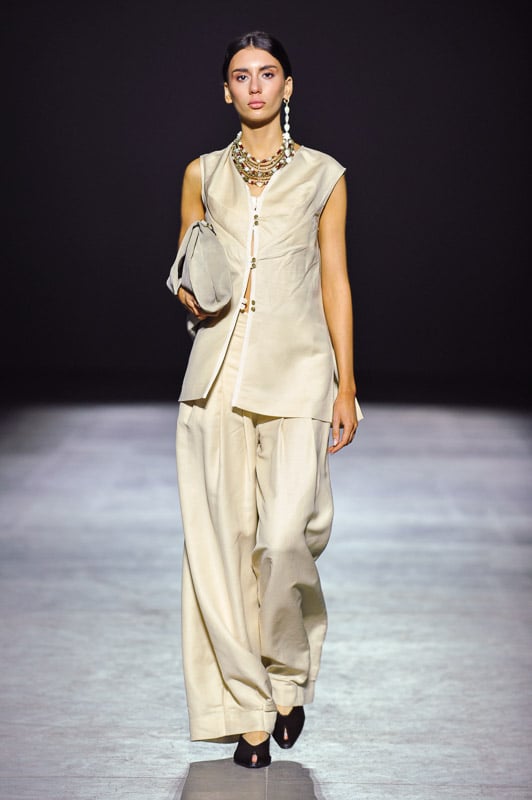
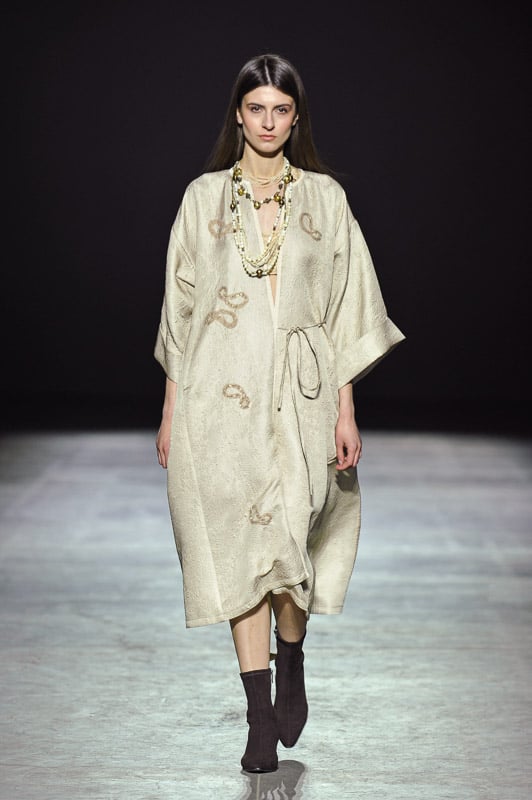
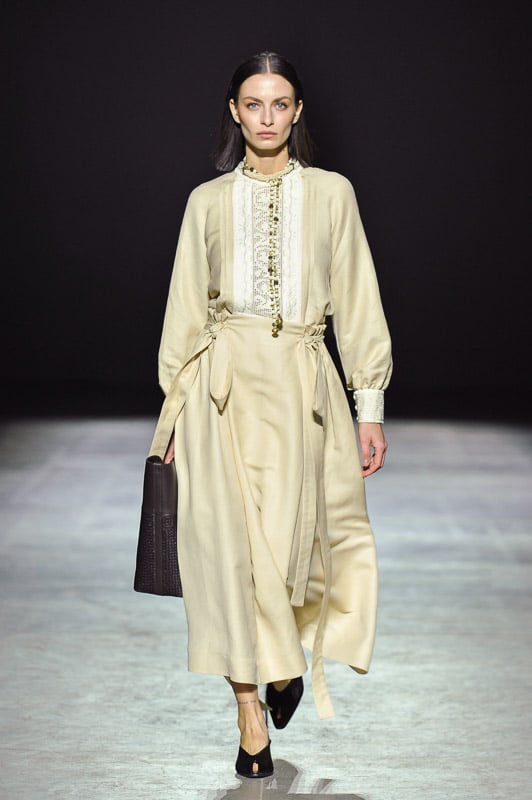
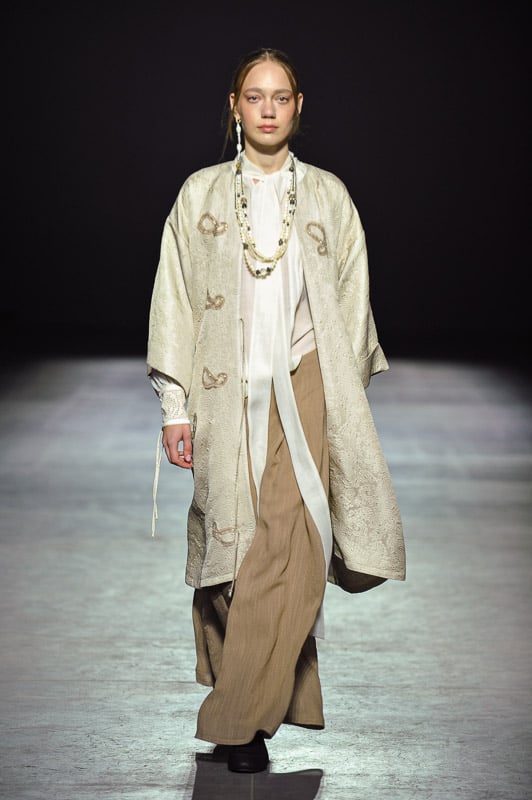
More than that, this collection has leaned hard into traditional embroidery. Nearly every piece is wonderfully adorned, sometimes with a white-on-white or ivory color palette so that the embroidery lends texture. The combination of silk thread on linen, or wool thread on silk, means that even the most basic of pieces, such as a loose buff-colored jacket, has visual interest.
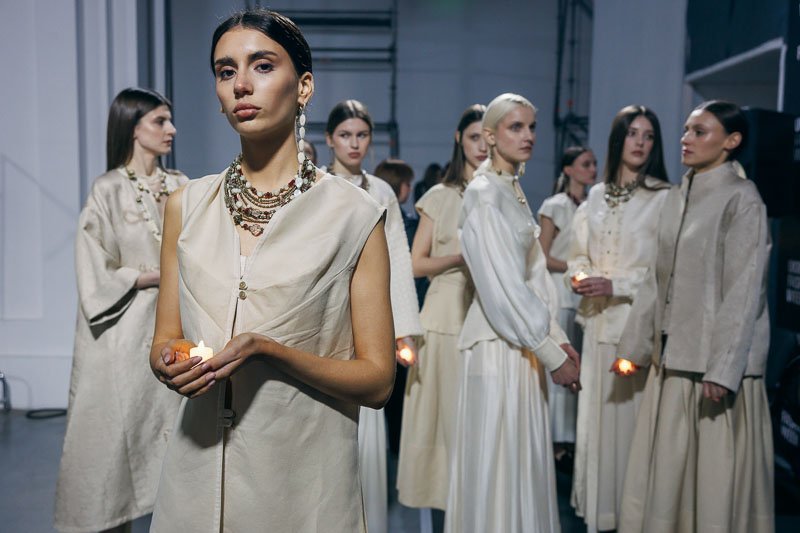
Khrystyna Rachytska "Live" during Ukrainian Fashion Week - March 2026
If you’ve never done hand embroidery before, there’s a kind of intimacy that you develop with the garment that you’re working on. Given how relatively easy it is to run fabric through a sewing machine, we don’t actually tend to spend that much time with clothing we make, at least not as much as we used to. Embroidery forces you to slow down, to consider, and to get to know your fabric in a way that you don’t get from just stitching things together. This understanding is clear in this collection, a deceptively forceful rejection of polyester fast fashion.
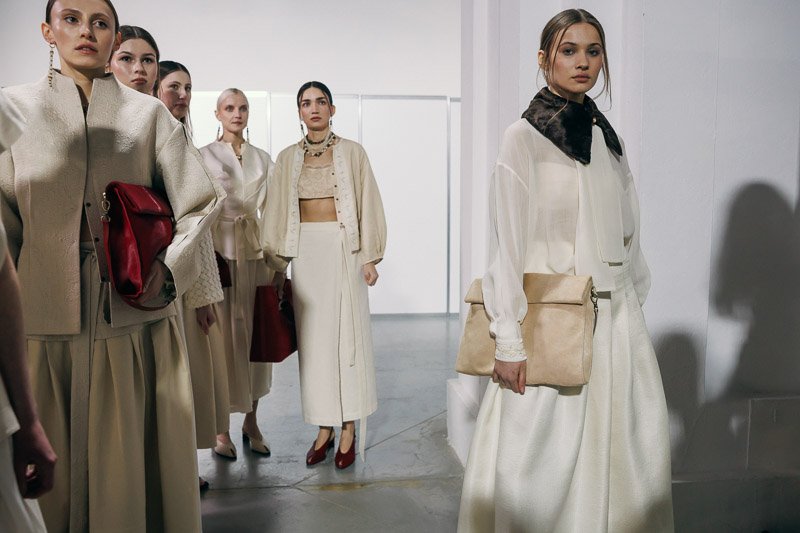
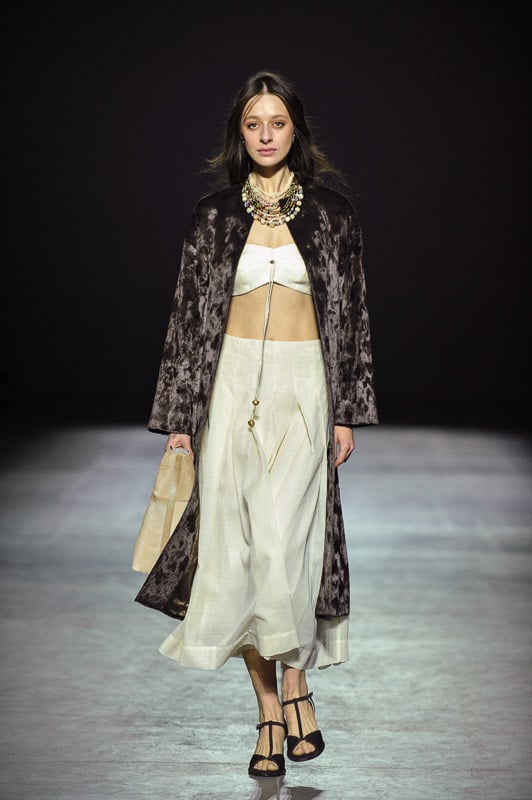
Khrystyna Rachytska "Live" during Ukrainian Fashion Week - March 2026
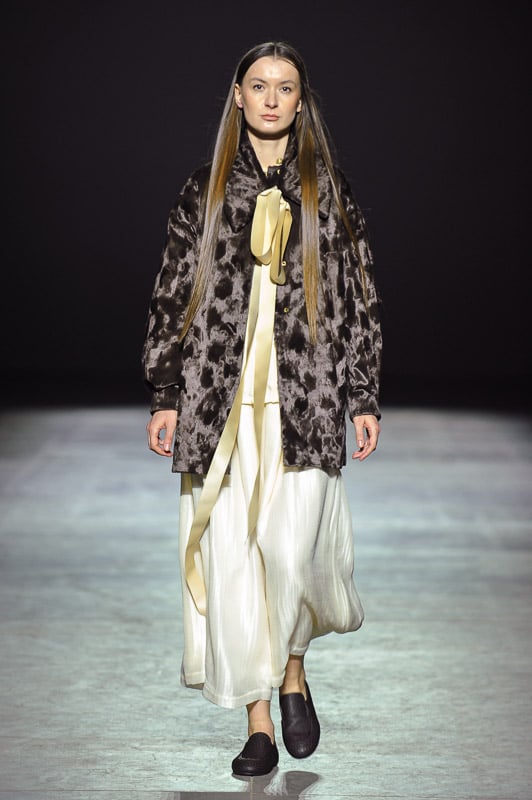
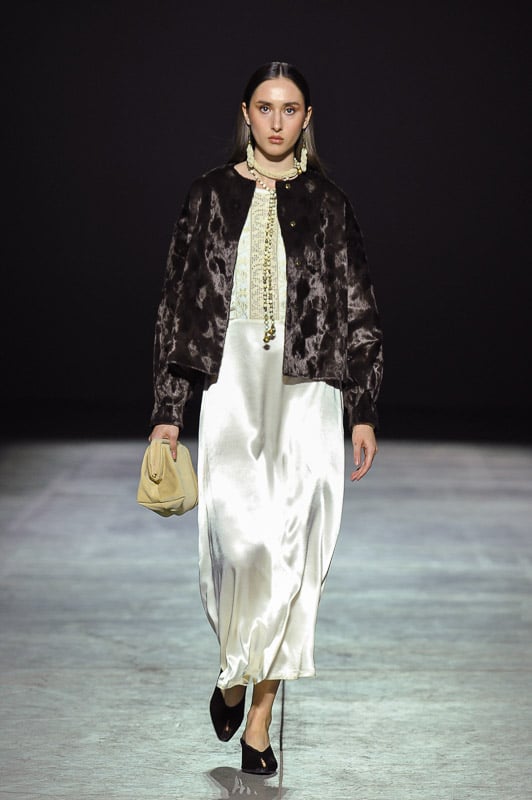
There’s an inherent beauty in preserving techniques in danger of going extinct (such as hand smocking), and even more so when it’s married to traditionally-inspired designs. This collection easily proves that it’s possible to embrace natural, sustainable materials, but still create elegance. There’s a versatility in the collection: It wouldn’t be hard to see one of these blouses—with handmade lace!—paired with jeans and blowing up on Instagram. Likewise, the subtle sheen of real silk lends an air of understated elegance, something formal but completely wearable.

Jordan emerged from a cornfield in Indiana in 1986. She went on to gain education in history, art history, and literature. She has predominately made a living writing for a variety of media, as well as a dress/fashion historian. She currently resides in a bog in Sweden and emerges every so often to forage for cheese and point at dogs.
Get the latest fashion, culture, and art updates, including magazine releases release parties
Sponsored Content