

Fashion
Artificial Intelligence is transforming fashion from spectacle to system—reshaping how designers create, how garments fit, and how production becomes sustainable. AI is quickly changing the landscape, but the Designer is not being replaced; it is being revealed.
Updated 12:05 am EST, March 2, 2026
Published 12:01 am EST, March 2, 2026
Artificial Intelligence is transforming fashion from spectacle to system—reshaping how designers create, how garments fit, and how production becomes sustainable. AI is quickly changing the landscape, but the Designer is not being replaced; it is being revealed.
Updated 12:05 am EST, March 2, 2026
Published 12:01 am EST, March 2, 2026
Artificial Intelligence has entered fashion through images, algorithms, and social media spectacle. But the real transformation isn’t visual—it’s intellectual. This article explores how AI, when designed with intention, may redefine creativity, authorship, sustainability, and the human body itself.

Before fashion becomes faster, smarter, louder, it must become more conscious. Artificial Intelligence did not arrive in fashion through the atelier. It arrived through screens—quietly at first, then suddenly everywhere. Hyperreal models, impossible garments, dreamlike videos. A flood of images scrolling endlessly through social media, each more spectacular than the last. Yet beneath this spectacle lies a deeper shift. AI is not changing what fashion looks like. It is changing how fashion thinks.
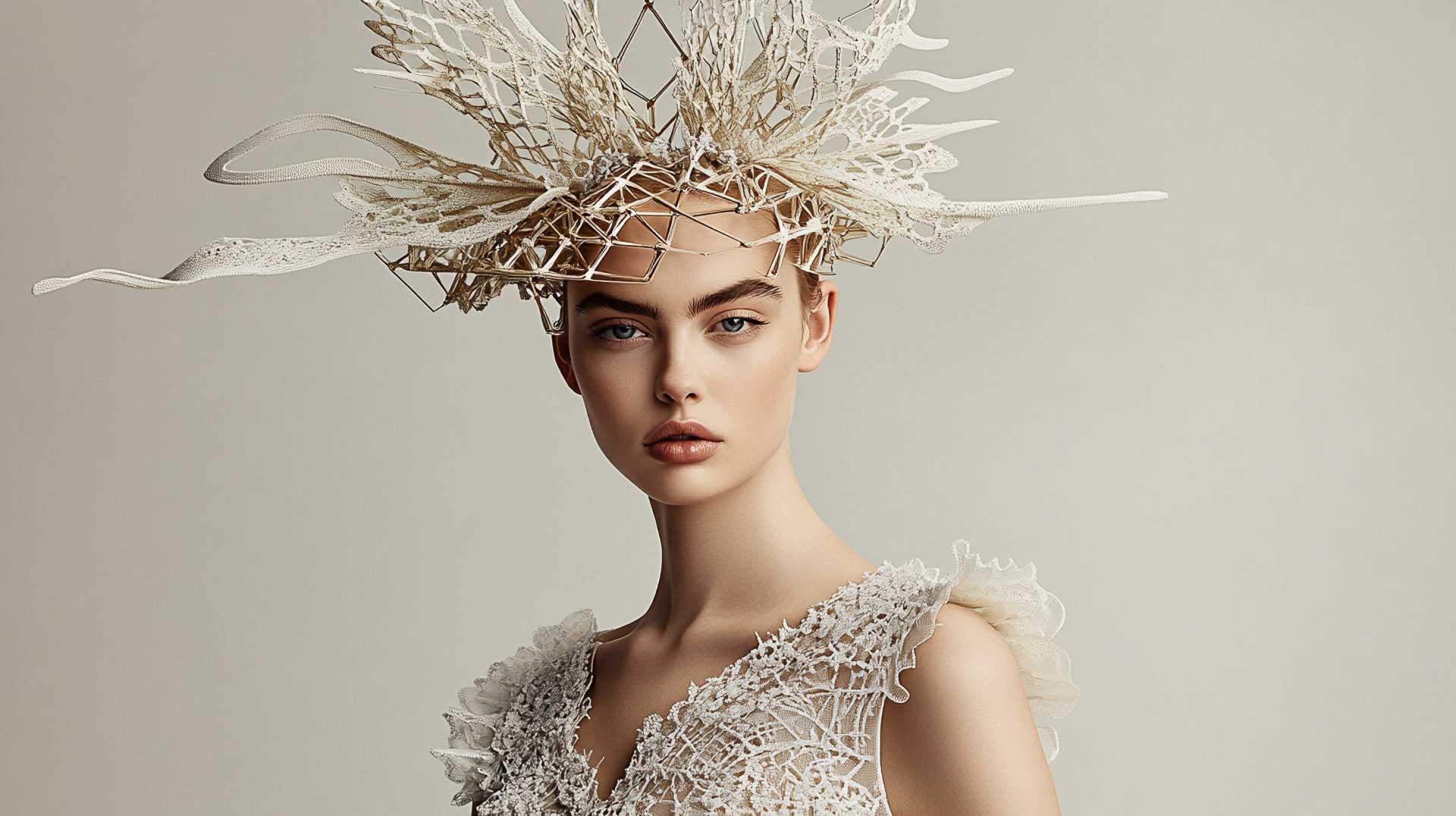
Fashion has always been inseparable from technology. The needle was technology. The loom was technology. Industrial sewing machines, synthetic fibers, CAD patternmaking, laser cutting—each innovation once feared, later normalized. Artificial Intelligence is not an anomaly. It is the next interface in a long lineage of tools that extend human capability. What makes this moment different is not the existence of technology, but its agency: AI doesn’t merely execute instructions—it interprets, predicts, and learns. And that forces a question the industry can no longer avoid: If a machine can generate fashion, what is left for the designer? The answer is everything that matters.
Much of today’s AI-fashion conversation lives at the surface. The images are undeniably seductive—many created with platforms like Midjourney, DALL·E, Stable Diffusion, Runway, or Krea AI. They dominate timelines, blur the line between fantasy and reality, and give the impression that fashion has entered a fully automated era.
But images are not garments. Fashion does not live in pixels. Fashion lives on bodies. And bodies introduce friction—movement, gravity, difference, age, vulnerability. This is where the illusion breaks.

Generate a fashion image using an AI tool. Then ask yourself: Could this garment actually be worn by a real body? That question defines the future of fashion.
Bodies are not averages. They bend, age, differ, and refuse standardization. For decades, fashion systems have forced bodies to adapt to garments instead of the other way around. Artificial Intelligence—when designed responsibly—has the potential to reverse that logic. The real revolution is not AI as image-maker, but AI as listener.
Systems capable of understanding human geometry, translating measurements into form, simulating fit before fabric is cut, and generating garments that can actually be manufactured. This is where AI stops being spectacle and becomes design intelligence.

A persistent myth surrounds AI: that it will democratize creativity by making everyone a designer. The truth is more uncomfortable—and more exciting. When execution becomes instant, intention becomes visible. When production becomes automated, ethics become central. AI cannot decide why a garment should exist. It cannot understand identity, culture, or responsibility. It cannot feel the weight of representation. Those remain human domains. Rather than erasing designers, AI exposes authorship. It separates those who generate from those who think. The future designer is not a stylist of trends, but a composer of systems—someone who curates, edits, and gives meaning to abundance.

If technology removes effort from creation, what becomes your responsibility as a designer—or as a consumer? Sustainability Is Precision. Fashion’s environmental crisis has never been aesthetic. It has been systemic. Overproduction, over-sampling, and over-guessing have defined industrial fashion for decades. AI offers an alternative—not through slogans, but through precision. Predictive production instead of speculation. Digital sampling instead of physical waste. On-demand creation instead of inventory overload. Localized manufacturing instead of global excess. Sustainability is not a feature. It is an architectural choice.

This transformation is not exclusive—it is universal. For teens, AI lowers barriers to entry, offering access to tools once reserved for elite institutions. For professionals, it expands creative range while demanding sharper thinking. For seniors, it promises better fit, comfort, and dignity—clothing that adapts to bodies, not the other way around. Fashion begins to listen.
If your fashion system collapses when AI arrives, it wasn’t fashion—it was automation pretending to be creativity. The brands that will survive are not the loudest, but the most intentional. The designers who will thrive are not the fastest, but the most thoughtful.
Soon, fashion will no longer ask “What does this look like?”, but “Who does this understand?”Soon, fashion will no longer ask “What does this look like?”, but “Who does this understand?”


Alberto is a Fashion Designer, entrepreneur, and educator. He pioneers research in AI-driven fashion intelligence, 3D patternmaking, and digital fabrication. Alberto is the founder of AR Couture LLC and creator of BespokeTailoring.ai and The Stitchery, ventures that merge fashion, technology, and education.
Get the latest fashion, culture, and art updates, including magazine releases release parties
Sponsored Content

