

Culture
Anna Haritonova devotes her practice to the creation of porcelain figures that do not attempt to imitate life, but to contain it. in her hands, a figure is not an object to be observed, but a vessel, a companion, a mirror.
Updated 11:30 pm EST, February 25, 2026
Published 02:54 pm EST, February 25, 2026
Producer: Natasha Tabunova
Retoucher: Luis Aponte
All images are Courtesy of Anna Haritonova
Anna Haritonova devotes her practice to the creation of porcelain figures that do not attempt to imitate life, but to contain it. in her hands, a figure is not an object to be observed, but a vessel, a companion, a mirror.
Updated 11:30 pm EST, February 25, 2026
Published 02:54 pm EST, February 25, 2026
Producer: Natasha Tabunova
Retoucher: Luis Aponte
All images are Courtesy of Anna Haritonova
Anna Haritonova: Much Beyond Dolls
There are cities that chase the future and cities that hold the past. Barcelona holds it with softness and longing, as if afraid it might fade away. Its streets carry centuries of footsteps; its stones speak quietly of devotion, trade, exile, prayer, and return. This city has always belonged to the hands of artisans who shaped wood, gold, silk, glass, and clay. It is a place where craft has never died, only changed its form. Craft lives here naturally. It does not announce itself. It does not need to. It rests in doorways, in the ironwork of balconies, in the uneven stitch of an old shawl drying on a windowsill.
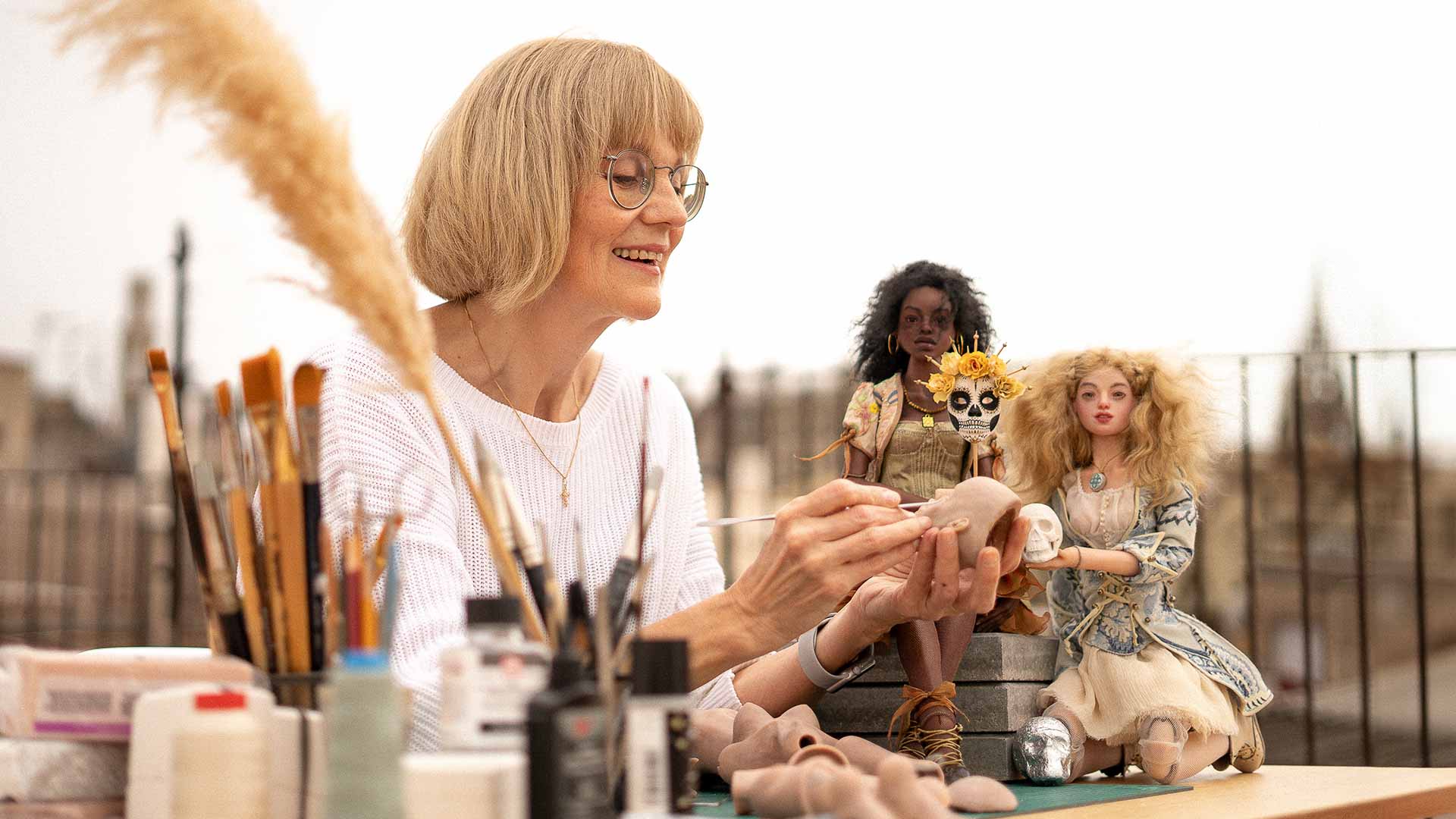
People say Barcelona changes, but that is not true; it simply revises its attire. Today, this lineage remains alive in the quiet studio of Anna Haritonova, an artist who does not work with ornament or likeness, but with presence. Haritonova devotes her practice to the creation of porcelain figures that do not attempt to imitate life, but to contain it. Within them live the stillness of icons, the intimacy of portraiture, and a silent sense of theatre. Here, in a room where Mediterranean light falls like silk across unfinished faces, Anna does not simply shape sculptures; she makes time tangible.
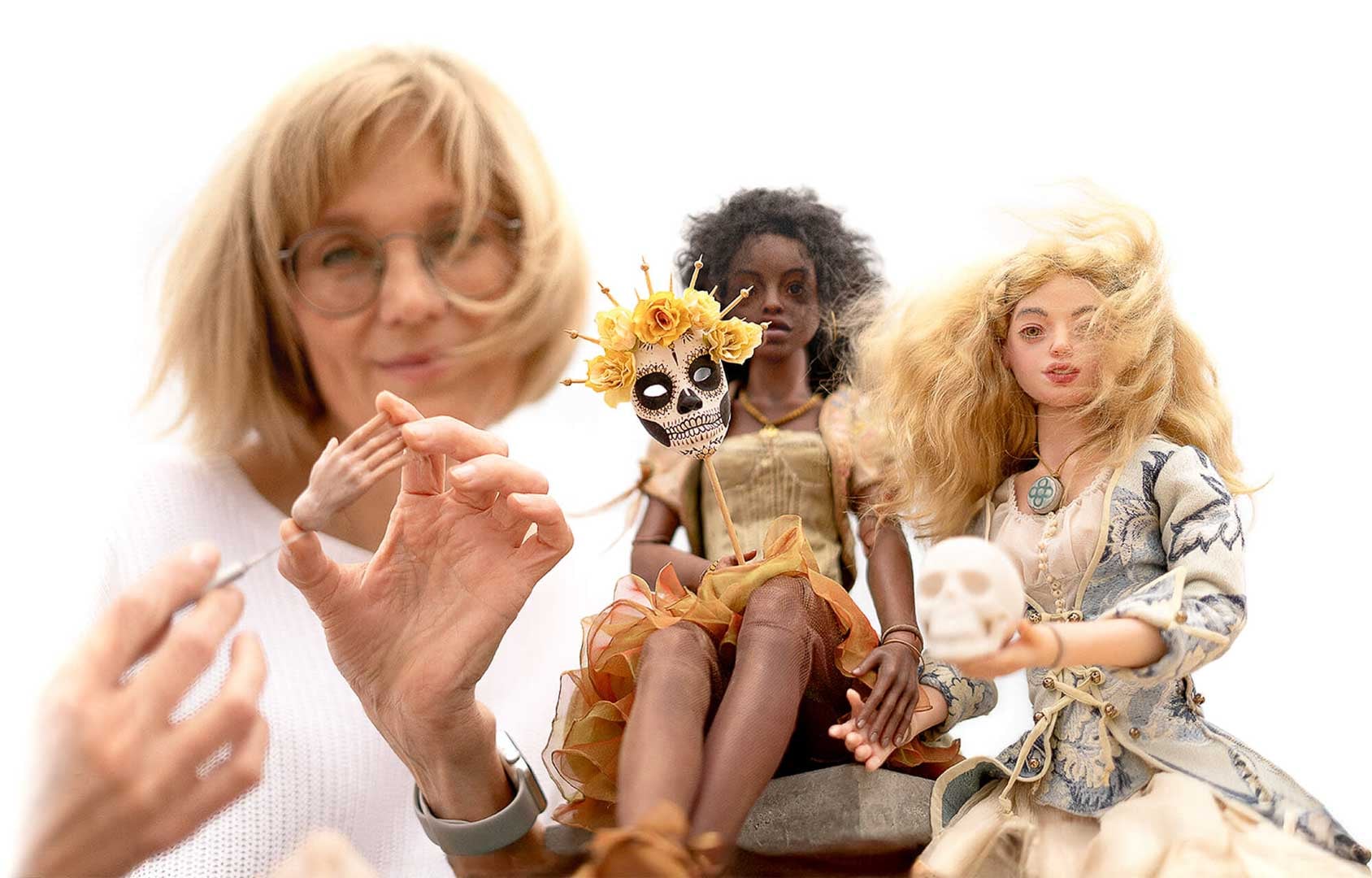
Her dolls, if they can be called that, are filled with life. They look at you gently, without letting you go. In Anna’s hands, a figure is not an object to be observed, but a vessel, a companion, a mirror. She does not begin with an idea or a design. She begins by listening to a posture, a memory, the specific texture of a fabric, the tilt of a neck, the distribution of weight in the hips, the angles of the body. These micro-gestures define the entire figure, and the work grows from there. Clothing becomes part of the character she brings into being, and the body decides the emotion long before the face is shaped.
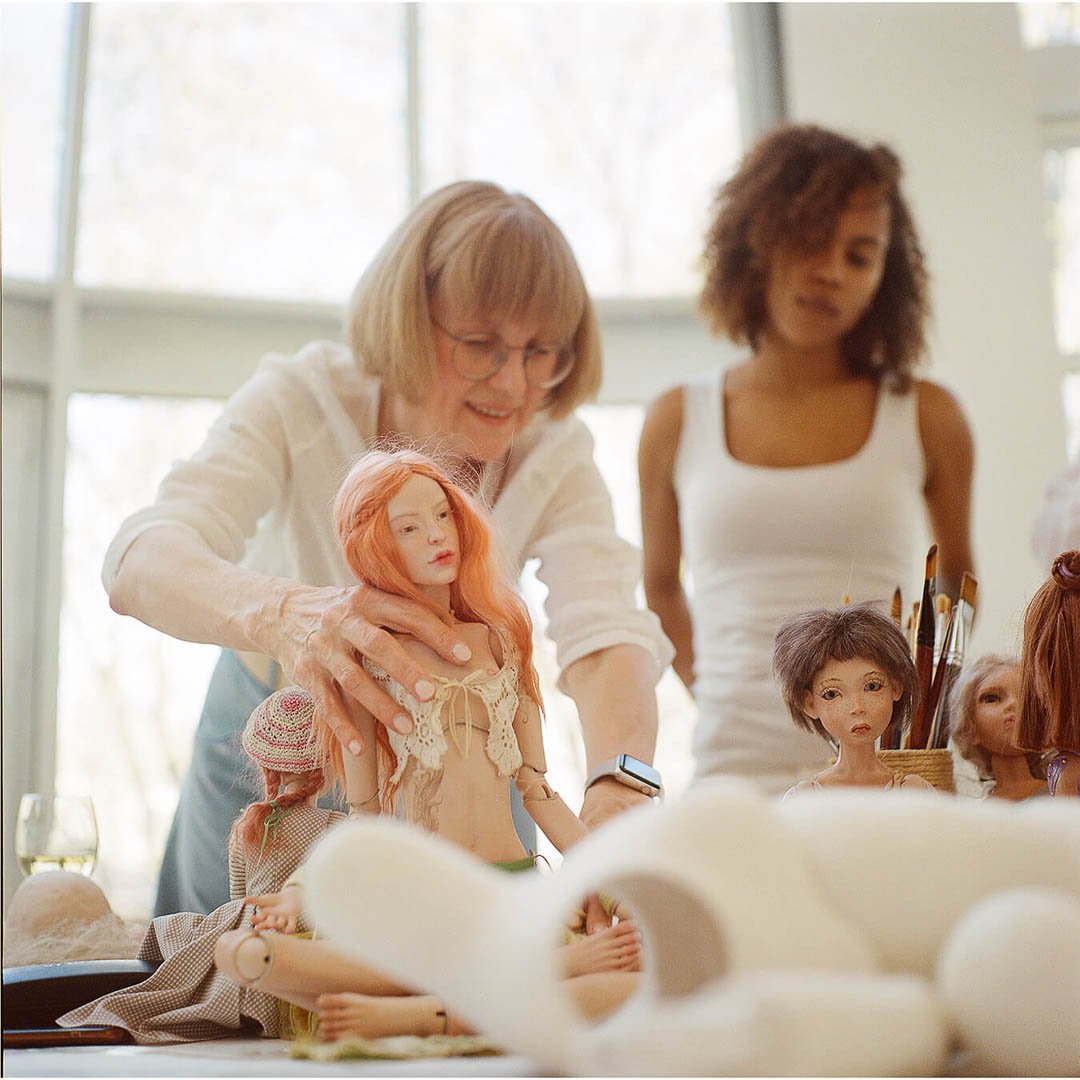
Only then is the figure sculpted, sanded, and fired, with deliberate slowness. The outside world moves fast, but in her studio, time behaves differently. It slows down and gathers itself. Today, Anna Haritonova’s name is associated with the new wave of European art doll making, although calling her works “dolls” is imprecise; in the contemporary art market, her work is understood more as sculpture and is collected in the same way as the ceramics of Simone Bodmer-Turner or the hand-built pieces of Roxanne Jackson, not out of nostalgia or tenderness, but for the emotional and conceptual force they hold.
She began to feel a quiet resistance, not against her world, but against its limits. It was not a rebellion. It was simply the moment she chose not to betray herself, not to silence the guidelines of her inner voice, but to transform them into change, into her own path into freedom.
Anna Haritonova does not seek perfection on scale or volume; instead, she studies gestures: a shoulder leaning slightly forward, the faint hesitation of a lowered gaze. Her signature is not form, but attention, a true luxury in the contemporary paradigm.
The artist grew up in Sarov, a region of Russia that “did not exist on maps,” one of those quiet, secret places built around science and silence. A world of nuclear physicists and families who carried intellect as both privilege and responsibility. Discipline was not imposed; it was inherited. A world striving towards ideal order, where certainty was a virtue and emotion a secondary concern.
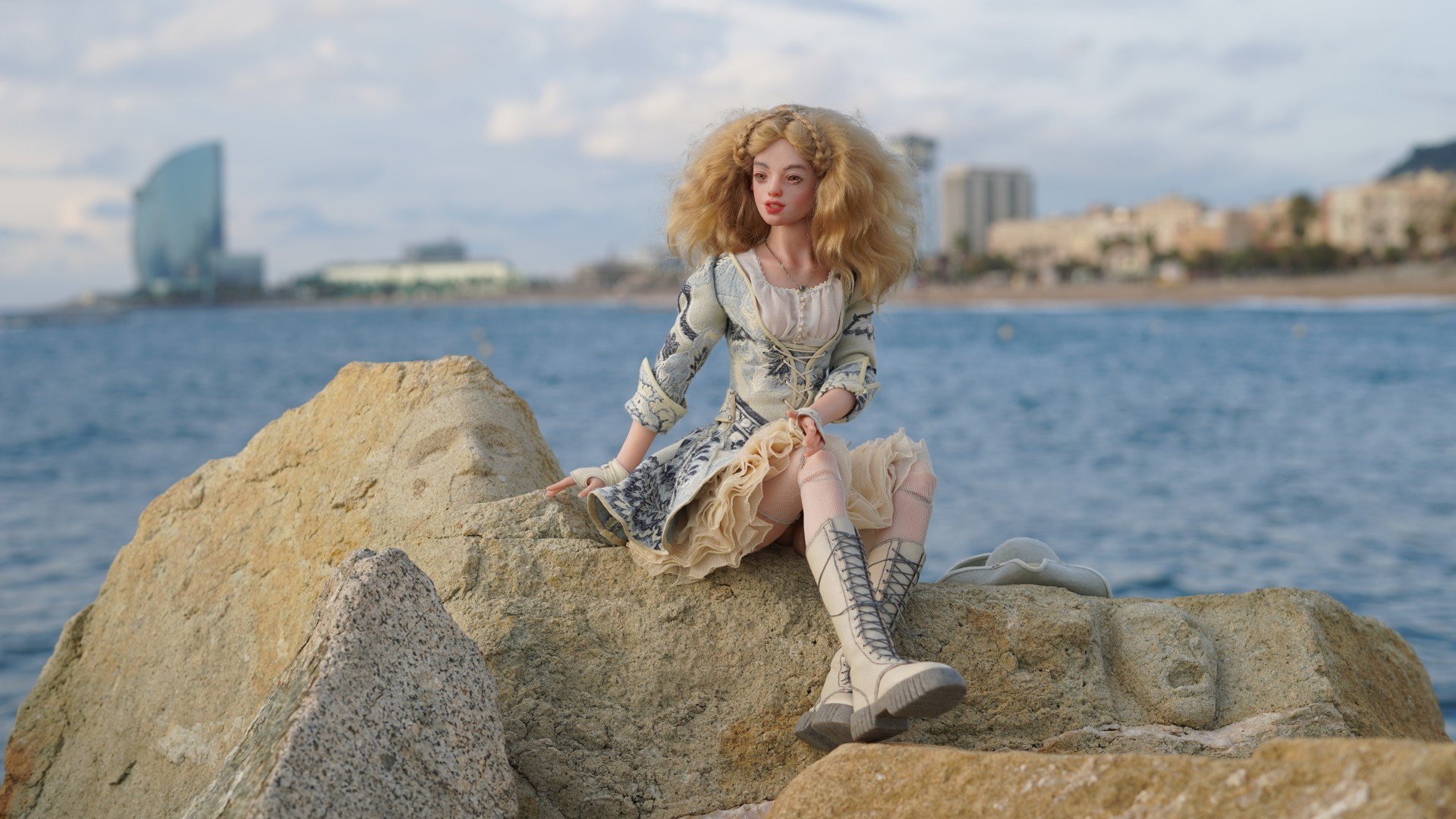
Carmen of Barceloneta
Barceloneta smells of salt and warmth. It is a neighborhood where balconies bloom with hanging laundry and the sea writes its own path. Carmen belongs to this rhythm. Her hair shines like sunlight on water, her calm gaze tracing endless horizons. She moves across the sand as if the tide knows her name. There is poetry in the way she stands, embodying the quiet certainty of someone who has found peace in movement. Local musicians say they can hear her in the sound of the waves. Freedom, in her, is not defiance. It is breath.
She entered High School, following the path laid out for her, comforted by predictability. But somewhere between the laboratories and the vast classrooms of her school, she began to feel a quiet resistance, not against her world, but against its limits. And so, one day, without drama, she stepped outside the system that had shaped her. It was not a rebellion. It was simply the moment she chose not to betray herself, not to silence the guidelines of her inner voice, but to transform them into change, into her own path into freedom.
Today, Anna Haritonova’s work has travelled widely. Exhibitions and showcases in Washington, Prague, Riga, Tallinn, Amsterdam, and Moscow, as well as teaching programs held in Italy. Her collectors value her pieces not as decoration, but as objects of profound emotional presence.
Despite the emotional depth of her sculptures, Anna Haritonova’s process is notably grounded; there is no mysticism, only work, rhythm, and attentive listening. Her studio in Barcelona is intentionally small. “Large spaces encourage noise,” she notes. Everything here is within reach: blocks of polymer clay, carved wooden elements, pigments, fine tools, and a drawer of textiles gathered with meticulous care. She does not paint expressions. Instead, she allows them to emerge, layer by layer. Sometimes an expression appears within an hour; sometimes it takes weeks. “There is a moment,” she says, “when the figure begins to look back at you. That is when I stop.” It is the only rule in her studio.
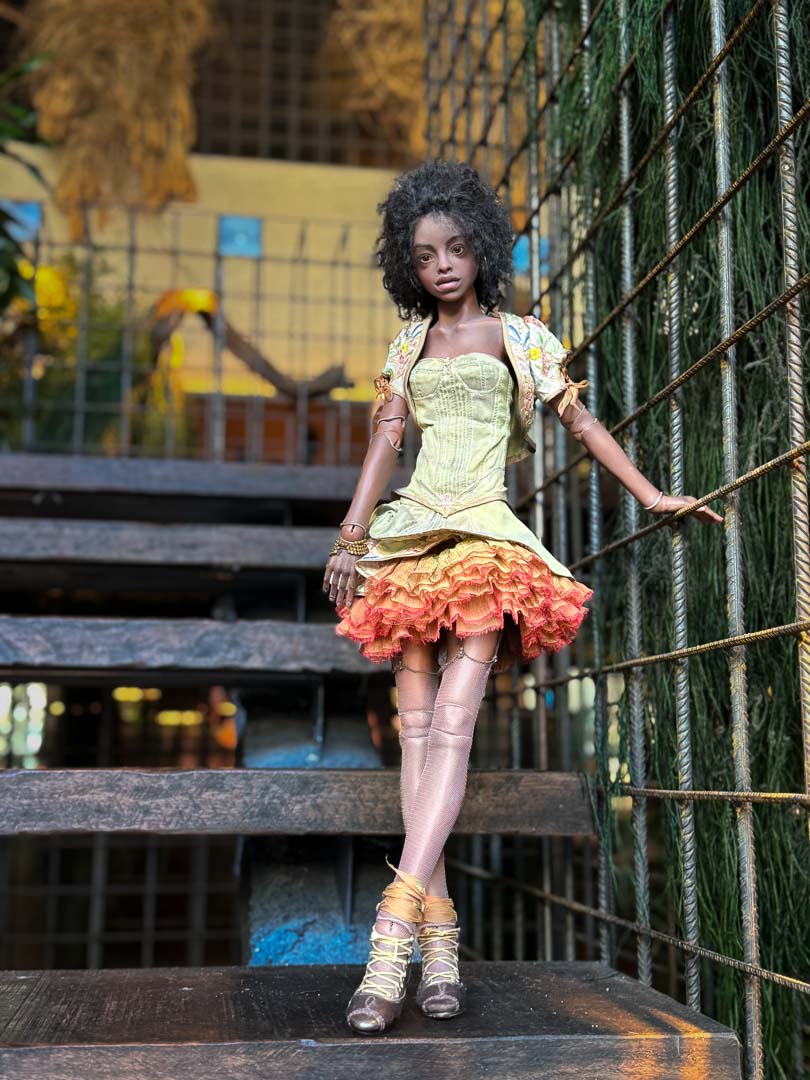
Nina of Poble-sec
If Barceloneta is day, Poble-sec is night. Here, cabaret lights blend with moonlight, and every corner hides a stage. Nina, whose name means doll in Catalan, lives between these worlds, a creature of rhythm and reflection. By day, she is stillness framed in a window; by night, she becomes pulse, laughter, and smoke. Artists and musicians speak of her as muse and myth, a quiet storm. The figure of Nina of Poble-sec holds this duality: restrained yet unpredictable, both mask and truth. She is the city’s heartbeat when it dances.
Clothing comes later. Fabrics are chosen through memory: a shirt once seen in Gràcia on a summer evening, a coat worn by a woman smoking outside the opera, the exact texture of a shawl folded in her grandmother’s house. Fashion, in her work, is biography. This is the part collectors understand immediately, not with the mind, but with the body. They recognize someone familiar, or someone they have lost. This is why the figures feel familiar. They are echoes.
She works in series, each one exploring a different context. The collection she is currently developing around Barcelona includes figures made from polymer clay, while the next will expand into mixed materials, including wood, a material she treats with particular respect. Barcelona does not reveal itself in the same way to everyone. It shows different faces depending on where you stand and on what you are ready to see. This collection takes shape from this understanding; she does not search for inspiration in the city, she moves through it, and the city moves back.
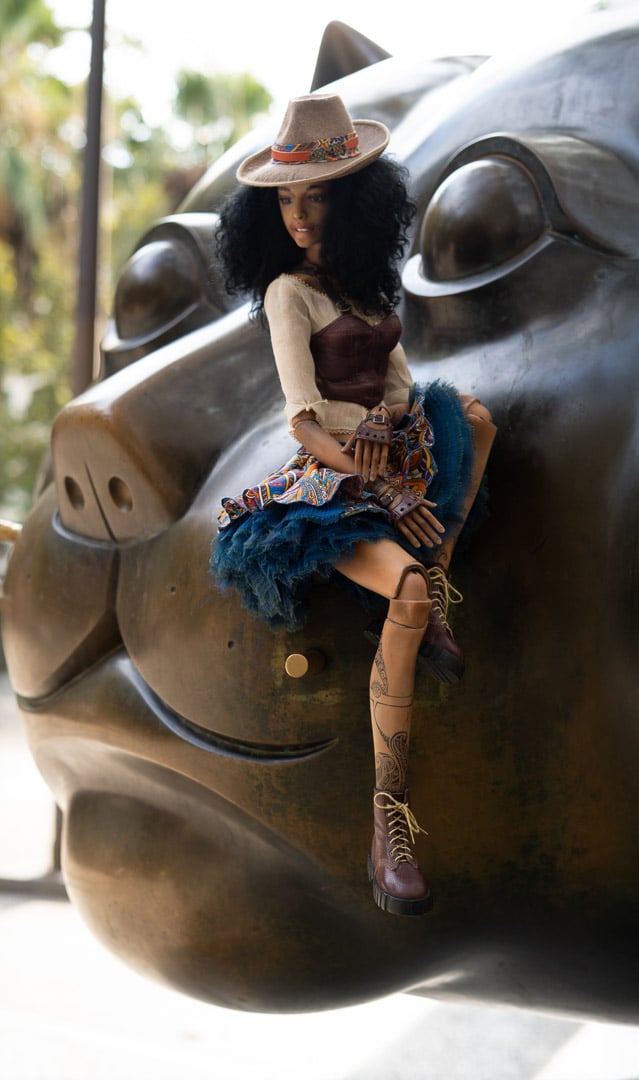
Dunia of Raval
Raval whispers differently. Its streets are narrow, its air feels dense with stories, spices, paint, distant guitars. Dunia passes through like a fleeting dream. Children follow her without knowing why. She rarely smiles, but when she does, it feels like dawn after rain. In her presence, the city remembers tenderness. The figure of Dunia of Raval carries this elusive grace, belonging and disappearing at once, a reminder that beauty can exist only for a moment.
The figures had never been meant to exist apart; they completed one another. She often speaks of this as the most overlooked element of craft. Everyone talks about inspiration. Few speak about the ability to let a piece leave. For Anna, in fact, the work becomes real only when it begins to live elsewhere. Not everything we create is meant to stay with us. Some things are meant to continue us, without us.
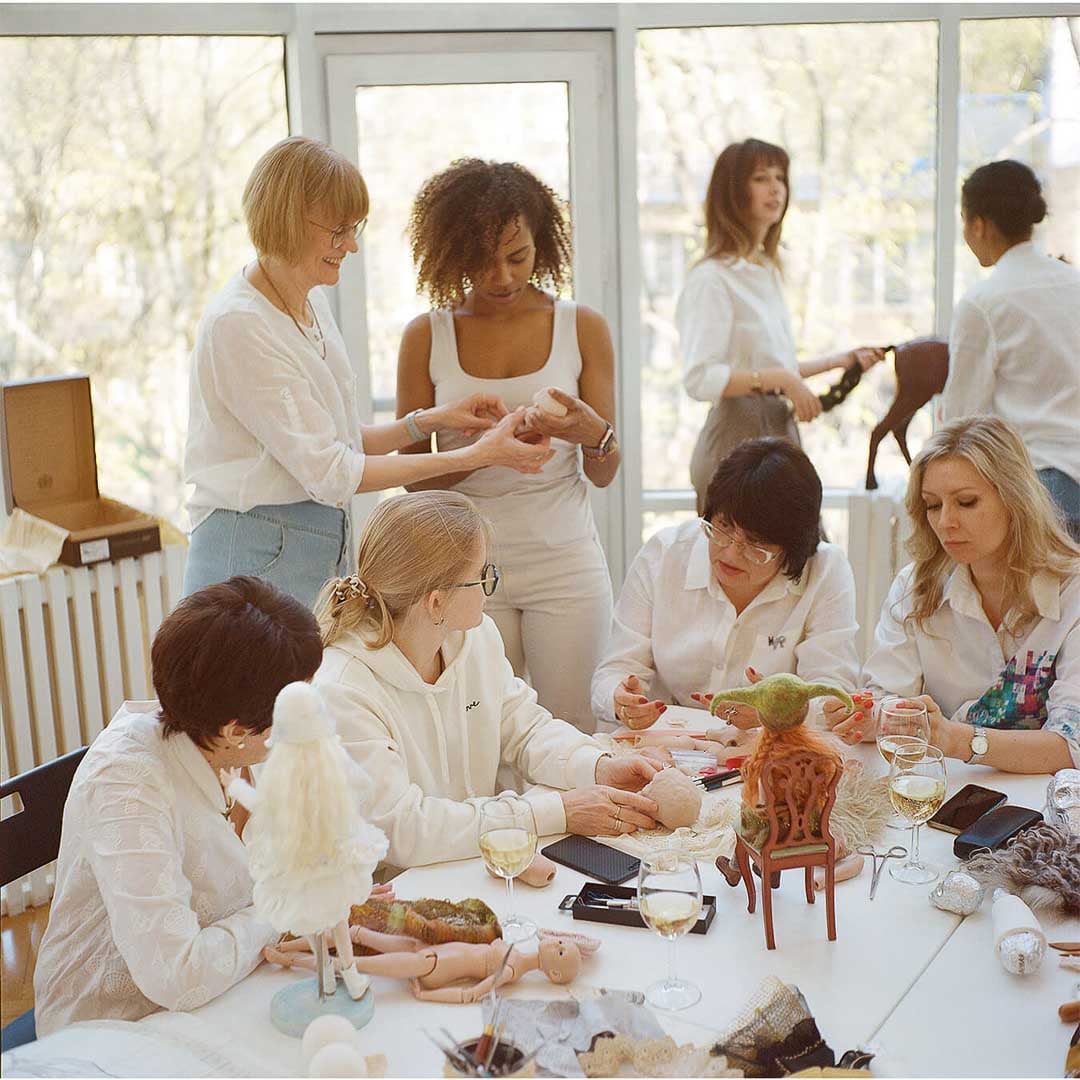
Teaching was never Anna’s goal, it emerged in the way certain paths reveal themselves only once you begin walking them. People began to ask to learn, not the technique, clay can be taught in an afternoon, but her way of seeing. Patience. The ability to practice with a line, a curve, a sensation, without rushing toward completion. Just a table, clay, and light. People paying close attention.
The first thing she always teaches is the same: your hands know well before you do. Learn to follow them. Students arrive anxious, with high expectations, and fear of doing something wrong. That dissolves quickly. During workshops, there is conversation, but it is quiet, gentle, sometimes unfinished. No one performs. No one competes. If someone becomes frustrated, there is no correction, only an invitation to try again, more slowly. The room becomes a kind of shelter, not from life, but within it. Many students arrive at moments of transition: after moves, after loss, after long silences. They do not say it aloud. They do not need to. Anna does not promise transformation; she promises practice, and practice, when done with attention, changes things. Not loudly. Not suddenly, more like the way a person begins to breathe differently, without noticing when it happens. Here, the work becomes more than art. It becomes a continuation of the person who is making it.
We live in a world that seems to accelerate by default. Culture is built on immediacy: fast images, fast identities, fast reinvention. In such a world, making something slowly is no longer simply a craft decision. It is a stance. Haritonova’s work is not slow out of nostalgia. It is slow because attention has duration, and she refuses to shorten it. The figures she creates take the time they take. They demand presence from the hands that shape them and later from the eyes that meet them. This is the quiet radicalism of her practice.
In a world that teaches us to move on, she teaches how to stay. Not in the past, but within one’s own life, long enough to take shape. Minds rush. Hands do not. Hands know a rhythm older than urgency. Perhaps this is why her work resonates now, at a moment when many are learning, sometimes painfully, that speed does not protect us. Speed only distracts us from what we are maybe afraid to feel. To make something slowly is to acknowledge that we are still here, that presence is possible, that the self is not lost, only perhaps asleep.
Anna’s dolls are not a retreat from the world. They are a way back into it, honest, unguarded, unhurried. They do not console. They accompany. And sometimes, that is the most human thing art can do.

Dedicated entrepreneur from Ukraine. Experienced tutor and successful business owner emphasizing up-to-date methods, the importance of high-quality and targeted content. Motivated professional bringing a 12-year career in small business ownership, business development, and education, who quickly masters new concepts and technologies. A happy mother.
Get the latest fashion, culture, and art updates, including magazine releases release parties
Sponsored Content
